
A poorly selected drawstring bag size can create issues during product packaging, bulk production, and final presentation. A bag that is too small may not fit the contents properly, while an oversized bag can increase material usage and affect the overall appearance. Many buyers also overlook how bag dimensions influence printable areas, logo proportions, and branding results.
Last Updated on September 24, 2026, by Gentle Bags Team
This drawstring bag size guide explains standard dimensions, measurement methods, logo size, and placement rules. You will learn how to choose the right drawstring bag size, define accurate specifications, and avoid common sizing mistakes before ordering custom drawstring bags.
What Is a Drawstring Bag and Why Do Its Dimensions Matter?

A drawstring bag is a soft container that uses a cord closure system at the opening to secure the contents inside. Unlike rigid boxes or hard cases, this type of packaging solution can adjust its shape around different products, making it suitable for various packaging and carrying applications where flexibility and easy access are required.
Drawstring bags have become a staple in today’s world—whether you’re heading to the gym, giving out event swag, or just looking for an ultra-light tote for daily essentials. Their appeal comes from one core quality: versatility.
These soft, flexible bags can go from carrying sneakers and a water bottle to holding gift items at a trade show, adapting to whatever life throws your way. Because they’re lightweight and easy to store when not in use, people favor them for quick trips, school, sports, and even as reusable shopping bags.
The recent surge in casual fashion and the growing focus on health and fitness have only boosted their popularity. It’s hard to find another packaging or carry solution that blends style, convenience, and adaptability as effortlessly as the humble drawstring bag.
Choosing the correct drawstring bag dimensions matters because:
- Protect product presentation: A suitable size keeps the contents organized and maintains a clean appearance when customers open the package or display the product.
- Improve logo and branding results: The available front area varies with bag size, helping brands maintain a balanced relationship between logo size and overall package appearance.
- Reduce unnecessary material use: Textile-based and other miscellaneous packaging materials generated around 340,000 tons of waste in 2018. For custom drawstring bags, selecting a size that closely matches the product helps improve material efficiency by reducing excess fabric and unnecessary space.
- Support consistent product packaging: Defined dimensions allow brands to apply the same packaging standards across different product lines, collections, or repeat orders.
- Enhance user experience: A well-sized package makes the opening, closing, carrying, and reuse process more convenient for end users.
Why Are Drawstring Bags Popular for Promotions and Events?
Drawstring bags have carved out a unique niche when it comes to corporate gifting and event giveaways—and for good reason. Their lightweight design, generous imprint space, and universal appeal make them a top pick for promoting brands or messages.
Here’s why they stand out as event favorites:
- Practical Keepsakes: Guests appreciate receiving something they’ll actually use, whether to stash trade show goodies, sports gear, or daily essentials. This keeps your logo visible long after the event ends.
- Versatile Branding Surface: With plenty of real estate on the front and back, even a bold brand logo, clever phrase, or campaign graphic stands out.
- Effortless Distribution: Drawstring bags are compact and easy to transport in bulk, cutting down hassle at conferences, expos, or festivals.
- Memorable Impact: Swapping out forgettable flyers or generic pens for a functional bag sets your event apart and leaves a lasting impression, just as organizations like the YMCA, TEDx, and Google do during their outreach.
Ultimately, when customized thoughtfully, drawstring bags become both an engaging promotional tool and a practical souvenir—delivering value for recipients and repeated exposure for your brand.
What Are the Standard Drawstring Bag Dimensions?
Drawstring bags come in a wide range of sizes, from compact pouches for small products to spacious sacks for clothing, sports gear, and household storage. Common options are grouped into small, medium, large, and extra-large categories based on their typical dimensions and intended uses. Each range serves different product volumes and applications, providing a practical starting point for selecting the most suitable size.

Small Drawstring Bags
Small drawstring bags are generally 4–5 inches (10–13 cm) wide and 6–7 inches (15–18 cm) high. Their compact body keeps lightweight products contained without surrounding them with excessive fabric. The close fit also helps small items remain visible and organized when presented in gift boxes, retail displays, or promotional sets.
Jewelry, coins, cosmetic samples, charging cables, earphones, game pieces, and gift favors commonly use this range. For example, a 4 × 6-inch pouch can hold earrings or a small sample bottle. The upper end of the range gives more room for bracelet boxes, travel-size cosmetics, compact electronics, or several small accessories packed together.
Medium Drawstring Bags
For medium drawstring bags, the width commonly falls between 10 and 12 inches, with a height of 12–16 inches (about 25–30 cm wide and 30–41 cm high). This range bridges the gap between a product pouch and a full-size drawstring backpack. It offers enough capacity for grouped items without creating the loose appearance of a larger sack.
Folded T-shirts, slippers, toiletry kits, beauty sets, toys, swimwear, and small towels often fit well in a medium drawstring bag. Event organizers also use these sizes for giveaway kits containing brochures, samples, and lightweight merchandise. A taller format becomes useful when the contents need to stack vertically rather than spread across the base.
Large Drawstring Bags
Most large drawstring bags provide a width of around 14–16 inches (36–41 cm) and a height of 18–20 inches (46–51 cm). These proportions are common for backpack-style designs because they provide practical space for everyday items and still fold flat when not in use. A wider opening also makes loading books, shoes, or layered apparel much easier.
Schools, gyms, trade shows, sports clubs, and promotional campaigns frequently use drawstring bags in this range. A 14 × 18-inch format can carry notebooks, a light jacket, and several small items. Moving closer to 16 × 20 inches creates extra room for footwear, towels, event materials, or a branded merchandise bundle.
Extra-Large Drawstrings
Extra-large drawstring bags typically measure 18–20 inches (46–51 cm) wide and 24–27 inches (61–69 cm) high. These formats focus on volume rather than compact presentation. They suit soft or bulky contents that occupy considerable space but may not require a rigid container.
Laundry, bedding, blankets, team uniforms, winter clothing, beach supplies, and sports equipment are typical examples. The additional height helps long garments or towels sit more naturally, and the broader body can hold multiple pieces without heavy compression. For storage programs, the larger front panel also makes product grouping and category identification easier.
Standard Drawstring Bag Size Chart
A standard drawstring bag size chart offers a quick way to compare common dimensions and match them with typical product uses. These ranges provide a useful starting point, but the size category alone does not confirm product fit. Contents with rigid corners, added thickness, or multiple pieces may require more width, height, or gusset depth than a flat item with similar front dimensions.
| Size Category | Typical Dimensions in Inches (W × H) | Typical Dimensions in Centimeters (W × H) | Common Product Uses |
| Small | 4–5 × 6–7 in | 10–13 × 15–18 cm | Jewelry, samples, coins, cables, cosmetic items, gift favors |
| Medium | 10–12 × 12–16 in | 25–30 × 30–41 cm | Folded apparel, slippers, toiletries, toys, beauty sets, event kits |
| Large | 14–16 × 18–20 in | 36–41 × 46–51 cm | Books, shoes, gym clothes, towels, sportswear, promotional products |
| Extra-large | 18–20+ × 24–27+ in | 46–51+ × 61–69+ cm | Laundry, bedding, uniforms, blankets, equipment, bulky textiles |
How Are Drawstring Bag Dimensions Measured?
Drawstring bag dimensions should be measured from consistent reference points on the finished product. Following the general GS1 Package and Product Measurement Standard, width runs from left to right, height from the base to the top, and depth from front to back. Drawstring-specific measurements, including usable height below the channel, still need separate reference points.
Confirm the Finished Width and Height

Lay the empty drawstring bag flat with the front panel facing upward. Measure the finished width horizontally from the left outer edge to the right outer edge across the main body. Keep the ruler or tape straight, and do not include loose cords, protruding tabs, or decorative attachments.
Next, measure the finished height vertically from the bottom outer edge to the top edge of the opening. Record width first and height second, such as 12 × 16 inches (W × H). When comparing a drawing with a sample, use the same edge-to-edge reference points to prevent small differences in measuring method from appearing as size errors.
Identify Usable Height Below the Channel
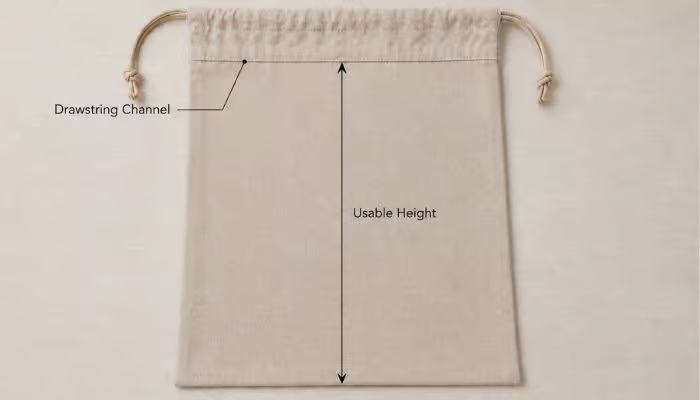
The usable height starts below the drawstring channel because the upper section holds the cord and gathers during closure. Locate the lower stitching line of the channel, then measure vertically to the finished bottom edge of the main compartment. This value will normally be shorter than the overall bag height.
A bag with a finished height of 16 inches may provide only 14 or 14.5 inches below the channel, depending on the channel width and seam construction. Mark this measurement clearly as usable height below the channel rather than finished height. That distinction prevents the closure section from being mistaken for normal packing space.
Measure the Gusseted Drawstring Bag

A gusset may appear along the sides, across the bottom, or in both areas. For a side gusset, unfold the side and measure its full expanded depth. For a bottom gusset, open the base and measure from the front fold to the back fold at the widest point. Do not use the visible tuck width on the flat bag, as it may represent only half of the full gusset depth.
Write the specification as width × height × depth. For example, 12 × 16 × 4 inches means the bag is 12 inches wide, 16 inches high, and 4 inches deep when the gusset is open. The specification should also name the gusset position because a 4-inch side gusset and a 4-inch bottom gusset do not create the same finished shape.
Check the Dimensions of the Filled Bag

Fill the drawstring bag with the actual product or a sample that matches its final packed size. Arrange the contents in the intended position, close the drawstring, and allow the fabric to settle naturally. Measure the widest horizontal point, the height from the base to the highest closed point, and the deepest expanded section.
Label these results as filled dimensions so they are not confused with the flat finished size. A flat bag may measure 12 × 16 inches, but a thick product can reduce the visible front width and change the closed height. Recording both empty and filled measurements provides a clearer picture of the bag’s final occupied shape.
How to Choose the Right Drawstring for Bags?
The right drawstring should match the bag’s material, opening structure, expected load, and carrying method. A cord that is too thin may cut into the fabric or feel uncomfortable in the hand, whereas an oversized cord can jam inside the channel and prevent smooth closure. The best option should open easily, hold the bag closed, and remain comfortable during normal use.
Select the Drawstring Material and Style

Drawstring material affects grip, flexibility, wear resistance, and visual appearance. The cord style determines how the opening gathers and how the drawstring bag is carried. Both should match the fabric weight, channel width, intended use, and overall design.
Common drawstring materials include:
- Cotton cord: Soft to the touch and visually compatible with cotton, canvas, jute, and gift pouches. Cotton cord suits light to moderate use, but it can absorb moisture and show wear faster in outdoor conditions.
- Polyester cord: Maintains its shape well and resists moisture, stretching, and repeated pulling. This material works well for promotional bags, gym sacks, and other frequent-use applications where consistent performance is required.
- Nylon cord: Provides a smooth surface and strong tensile performance even with a compact diameter. The material suits sports and outdoor bags, although its slightly glossy finish may not match natural-fabric packaging styles.
- Ribbon or satin cord: Creates a decorative appearance for cosmetics, jewelry, gifts, and premium packaging. Compared with thicker braided cord, this option carries less weight and may crease when pulled through a narrow channel.
Common drawstring styles include:
- Single-cord closure: One cord runs through the channel and gathers the opening from one direction. This simple structure works well for small pouches and lightweight packaging.
- Double-cord closure: Two cords pull from opposite sides, creating a more balanced and even closure. It is often used for gift bags, product pouches, and medium-sized packaging.
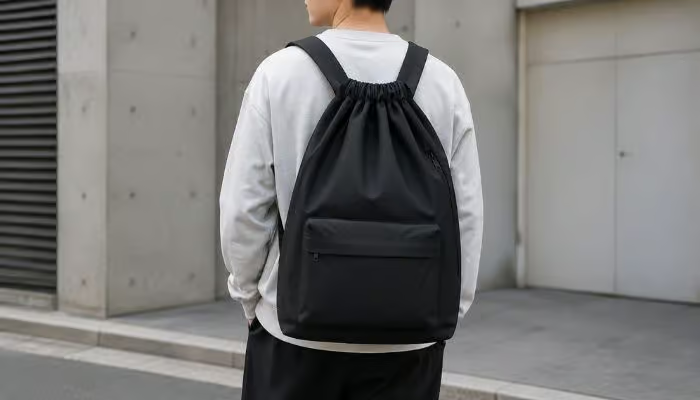
- Backpack-style cord: The cord passes through the top channel and connects to the lower corners, forming shoulder loops. Its routing must support full opening, secure closure, and comfortable carrying.
Match the Cord Diameter
Select the cord diameter according to the bag size, channel width, and intended use. Small pouches and lightweight packaging usually need a slim cord that can move easily through a narrow channel. Larger drawstring backpacks or sports bags often require a thicker cord because the cord also carries the bag’s weight.
The cord should pass through the channel and eyelets without friction, yet it should not feel too thin for the expected contents. A suitable diameter allows the opening to gather smoothly, keeps the cord proportional to the drawstring bag, and provides enough comfort for the intended carrying method.
When the drawstring also carries part of the load, descriptions such as “thin” or “thick” are not precise enough for a technical specification. ISO 2307 fibre-rope testing methods provide recognized procedures for measuring diameter, elongation, and breaking force, although the finished bag still requires a load and carrying test under its intended conditions.
Determine the Drawstring Length
Select the drawstring length according to the bag height, opening width, cord routing, and intended carrying method. For a simple pouch, the cord should pass through the complete channel, open the mouth fully, and leave enough exposed length for pulling or tying. Double-drawstring bags need two equal cords so the opening closes evenly from both sides.
When the cord also acts as a handle or shoulder strap, its length directly affects carrying performance. Short cords can restrict the opening and hold the bag too high, which may increase pressure on the hands or shoulders. Excessively long cords allow the filled bag to hang lower and move more during walking. The final length should provide full opening, secure closure, and a stable carrying position without excessive loose cord.
The bag height can provide an initial reference for drawstring length:
- Small bags, 4–7 inches high: Start with approximately 12–16 inches of cord.
- Medium bags, 10–16 inches high: Drawstring lengths typically range from 24 to 28 inches.
- Large bags, 16–24 inches high: A starting range of 30–40 inches may be suitable.
Key Considerations for Custom Drawstring Bag Sizing
The right custom drawstring bag size depends on more than the product’s length and width. You also need to consider quantity, thickness, packing direction, closure space, gusset structure, and material behavior. A suitable specification should fit the complete packed contents, not just the product in an empty or unassembled state.
Product Dimensions and Quantity
Begin with the overall dimensions of the contents in their final packed condition. Measure protective sleeves, retail boxes, inserts, accessories, and any other components that will remain inside the drawstring bag. Using only the dimensions of the main product may result in a specification that cannot accommodate the complete set.
Quantity changes the required space in different ways. Several thin items can increase the total thickness, while products arranged in one row may require more width. For example, three folded shirts create a deeper bundle than one shirt, but three cosmetic boxes placed side by side create a wider package. Record the combined width, height, and thickness before defining the bag size.
Packing Orientation
Packing orientation determines which side of the product corresponds to the bag width, height, and depth. A rectangular box positioned upright may need a taller bag with a narrower body. Rotating the same box can reduce the height requirement but increase the opening width.
The selected direction should remain consistent during packing. If some products enter upright and others lie sideways, the filled bags may not have the same shape or logo presentation. Confirm whether the contents will be placed vertically, horizontally, flat, or in layers before defining the drawstring bag dimensions. This creates a repeatable packing method and a more consistent finished appearance.
Loading and Closure Space
The drawstring bag should provide enough space around the product for smooth loading and removal. When the internal width closely matches a rigid box or thick item, its corners may catch on the opening, lining, or side seams. Additional side and depth allowance helps the complete product set enter the bag without forcing or stretching the fabric.
The bag also needs free height between the top of the product and the lower edge of the drawstring channel. This space allows the upper fabric to gather inward when the cords are pulled. Thick, rigid, or wide contents generally require more closure allowance to keep the opening fully closed without compressing the product.
Bag Structure and Gusset Depth
Bag structure affects how the drawstring bag accommodates product thickness. A flat design has no defined depth, so thicker contents pull the front and back panels outward and use part of the available width and height. It is therefore more suitable for slim products, folded textiles, documents, and other relatively flat contents.
A gusset creates additional depth without excessively increasing the front-panel width. Side gussets suit products with consistent thickness, while a bottom gusset provides more room near the base. The gusset depth should match the thickness and arrangement of the packed contents; too little depth restricts loading, while too much creates unnecessary fabric and loose folds.
Material Thickness and Flexibility
Material thickness and flexibility both affect custom drawstring bag sizing. A single-layer polyester or nylon construction occupies little internal space and can conform closely around rounded bottles and irregular products. Canvas, laminated fabric, coatings, and folded seams create thicker edges and a stiffer body. For example, a 1 mm lining on both the front and back panels can reduce the available depth by about 2 mm before seam buildup is considered.
Thicker or less flexible constructions need more clearance around the packed contents. Rigid boxes and bulky product sets may require additional width, a deeper gusset, or more height below the drawstring channel so they can enter easily and the opening can gather fully. The final drawstring bag dimensions should reflect the complete material construction rather than the outer fabric alone.
Drawstring Bag Logo Size and Placement Guidelines
Drawstring bag logo size and placement should follow the usable front panel rather than the full finished dimensions. The drawstring channel, seams, gussets, eyelets, and filled shape all reduce the area where artwork can remain flat and visible. A balanced logo should fit within the main panel, preserve clear margins, and stay readable after the bag is filled and closed.

Recommended Logo Size by Bag Dimensions
The recommended logo size depends on the drawstring bag width, height, and available print area. As a practical starting point, the artwork can occupy around 40%–60% of the usable panel width. This is not a fixed standard, but it usually leaves enough space around the design to prevent a crowded appearance.
These figures describe a visible central logo rather than full-panel artwork. A complex graphic may need more space than a short wordmark because fine lines and small text become harder to reproduce at reduced sizes. The final drawstring bag logo size should preserve legibility first, even when that means using less of the available panel.
| Drawstring Bag Size | Typical Bag Dimensions | Suggested Logo Width | Suggested Logo Height |
| Small | 4–5 × 6–7 in (10–13 × 15–18 cm) | 1.5–2.5 in (4–6 cm) | 1–2 in (2.5–5 cm) |
| Medium | 10–12 × 12–16 in (25–30 × 30–41 cm) | 4–7 in (10–18 cm) | 3–6 in (8–15 cm) |
| Large | 14–16 × 18–20 in (36–41 × 46–51 cm) | 6–10 in (15–25 cm) | 4–8 in (10–20 cm) |
| Extra-large | 18–20+ × 24–27+ in (46–51+ × 61–69+ cm) | 8–13 in (20–33 cm) | 6–11 in (15–28 cm) |
Choosing the Right Logo Layout
The drawstring bag logo layout should follow the artwork’s natural width-to-height ratio and the available front-panel space. Horizontal wordmarks suit wide front panels, square marks create a compact focal point, and vertical graphics need more available height. The artwork should keep its original proportions instead of being stretched to fill a predetermined space.
Multi-part designs require additional planning. A logo with a symbol, brand name, and tagline may work better as a stacked composition on a narrow pouch, while a single-line arrangement can suit a broader backpack-style panel. The layout should keep every element readable without making the design feel crowded or disconnected.
Ideal Logo Placement Areas
The central area of the front panel provides the most consistent logo placement for most drawstring bags. It keeps the artwork visible when the product lies flat, stands upright, or hangs naturally. Small product pouches usually suit true center placement because their contents tend to fill the body evenly.
Backpack-style drawstring bags often benefit from a slightly upper-center position. Once filled, the lower section may curve outward or fold around the contents, which can shift artwork placed too close to the base. Secondary information, care details, or an additional graphic can appear on the back panel without competing with the main front logo.
Safe Distance from Closures and Structural Details
A logo should remain clear of the drawstring channel, stitched edges, gussets, eyelets, corner tabs, and reinforcement patches. These areas do not stay flat during sewing or use. Artwork placed across them may become broken by stitching, hidden inside folds, or distorted when the opening gathers.
For early artwork planning, leave a visible border around the full design and increase the clearance near the top closure. Many layouts begin with approximately 10–20 mm of space from stitched edges, followed by adjustment for the bag size and printing method. The final print template should confirm the exact distance from every closure and structural detail.
How Do Printing Methods Affect the Size and Placement of Drawstring Bag Logos?
Different printing methods place different limits on drawstring bag logo size and placement. Equipment contact area, pressure, heat, fabric compatibility, and panel flatness all affect how large the artwork can be and where it can appear. The print method should be confirmed before finalizing the logo dimensions and position.
Screen Printing

Screen printing affects drawstring bag logo size through the screen mesh and ink deposit. Bold text, solid shapes, and medium-to-large graphics reproduce clearly, but very small lettering and thin lines may fill in or lose definition. Increasing the print area can improve visibility, although excessive ink coverage may make lightweight fabric feel noticeably stiffer.
Accurate screen-printed logo placement requires direct contact between the screen, ink, and fabric. The drawstring channel, gussets, seams, and eyelets interrupt that contact and can create uneven edges or missing sections. For this reason, screen-printed logos usually stay within the flat center of the main panel.
Heat Transfer Printing

The dimensions of the transfer sheet and heat-press platen set the maximum heat transfer logo size. Detailed text and multicolor artwork can remain clear at a smaller scale, but the complete design must fit inside one press cycle. Splitting a large logo across several transfers increases the risk of visible joins or misalignment.
Placement depends on even heat and pressure across the artwork. A thick seam, reinforced corner, or drawstring channel can lift part of the fabric away from the platen and weaken adhesion. Heat transfer logo placement should remain inside a flat area where the entire graphic receives consistent temperature and pressure.
Digital Printing

Digital printing gives more flexibility in drawstring bag logo sizing because it can reproduce gradients, fine lines, multiple colors, and complex graphics without separate screens. The printer’s maximum image area still controls the final width and height, but detailed artwork can usually remain legible at smaller sizes than basic screen-printed designs.
The production stage has a direct effect on digital logo placement. Printing on an unsewn fabric panel allows the design to extend closer to the panel edges and occupy a larger area. Once the bag has been assembled, cords, seams, folds, and hardware limit how the panel can lie on the printer bed, so the usable placement area becomes smaller.
Sublimation Printing
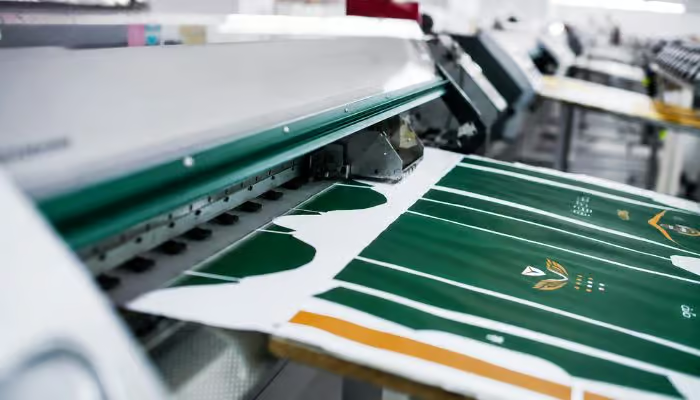
Sublimation places fewer restrictions on drawstring bag logo size because the dye enters polyester fibers rather than forming a raised layer on the surface. A logo can occupy most of the panel, and the design may also expand into a full-background pattern without making the material stiff.
For sublimation logo placement, artwork can extend beyond the finished panel when printing takes place before cutting and sewing. The file needs bleed around the outer edges, but essential text and brand marks must stay inside the safe area. Otherwise, trimming and seam allowances may remove or hide part of the design.
Embroidery
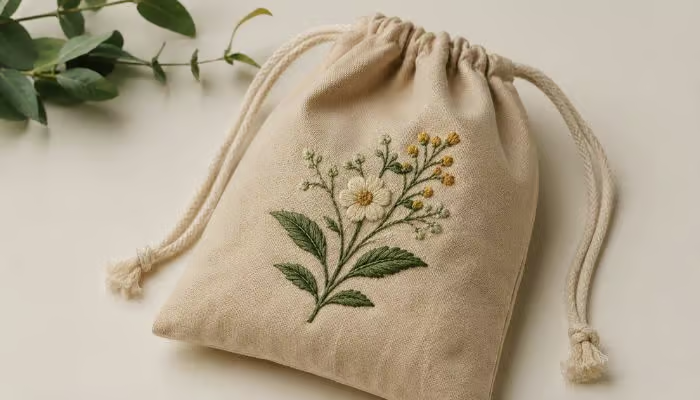
Embroidery sets both minimum and maximum limits for drawstring bag logo size. Very small lettering becomes difficult to form with thread, whereas a large, dense design adds stitch weight and may pull lightweight fabric out of shape. Simple logos with clear outlines usually produce better results than detailed graphics with thin lines or gradients.
The available hooping area controls embroidered logo placement. The fabric must stay flat and stable under the hoop, which makes the central panel more suitable than the drawstring channel, gusset, or seam area. Embroidery generally requires a smaller logo and a more restricted placement area than surface-printing methods.
Common Drawstring Bag Sizing and Logo Placement Mistakes
Many drawstring bag sizing and logo placement errors come from unclear specifications rather than the bag design itself. A dimension may look correct on a drawing but still fail after filling, closing, or printing. The safest approach is to define how every measurement is taken, test the actual contents, and approve the logo on a finished sample before bulk production.

Confusing Finished and Usable Dimensions
Finished drawstring bag dimensions refer to the external width, height, and depth measured from the completed outer edges. Usable dimensions describe the internal space available for the contents after excluding the drawstring channel, seam turnings, lining, and folded gusset areas. Comparing the product directly with the full bag height can therefore produce a pouch that cannot close correctly. Record both the finished dimensions and the usable height below the channel when product fit is critical.
Ignoring Thickness and Closure Space
A drawstring bag may provide sufficient usable width and height but still fail to fit or close around a thick product. This mistake occurs when the specification considers only the flat product outline. Measure the complete set in its final packing arrangement, including its maximum thickness, then leave free height between the product and the lower edge of the drawstring channel. Increase the width, gusset depth, or height when rigid corners, stacked items, or boxed products restrict loading and closure.
Using Incomplete Measurement Points
Incomplete reference points can produce inconsistent drawstring bag dimensions. Measure width from outer edge to outer edge, finished height from the bottom edge to the top opening, usable height from below the drawstring channel to the inside bottom seam, and gusset depth across the fully expanded fold. Mark each point on the drawing and record dimensions as W × H × D.
Omitting Size and Logo Tolerances
Leaving out drawstring bag size and logo placement tolerances can create confusion during cutting, sewing, printing, and final inspection. As a practical reference, finished dimensions are often controlled within ±5 mm for smaller bags and ±10 mm for larger bags, while logo position may allow around ±3–5 mm variation depending on the printing method and panel size.
Approving Only a Flat Mockup
A flat digital proof cannot show how the drawstring bag logo placement changes after the contents expand the front panel and the top gathers during closure. Artwork that looks centered on an empty layout may shift visually, curve around a thick product, or become partly hidden by folds. Review the logo on a filled and fully closed sample in the same position in which the bag will normally be displayed or carried.
Skipping the Pre-Production Sample
Skipping a pre-production sample allows one unresolved drawstring bag sizing or logo placement error to continue across the full order. Digital files cannot confirm actual product fit, gusset expansion, cord function, print scale, or the appearance of the filled bag. Test the intended contents in the sample, close and carry it normally, confirm the artwork position, and document every approved adjustment before bulk production.
Work With Gentle Bags to Customize the Right Size Drawstring Bags with a Logo
Gentle Bags develops custom drawstring bags around the actual contents, packing direction, material construction, gusset depth, closure method, and branding requirements. Our team can help confirm the finished dimensions, usable packing space, drawstring specification, logo size, and print position so the bag fits the product and presents the artwork clearly after filling and closing.
Choosing the Ideal Drawstring Bag for Your Needs
When selecting a drawstring bag, it’s important to consider more than just the size and logo. Start by evaluating the intended use—whether you need a compact option for small items or children, a medium bag for gym gear, or a larger capacity for travel and equipment. Assess the frequency of use and your personal style or branding goals, as these will influence both material and custom features.
Material & Durability
Different materials offer various advantages. For daily use, look for sturdy cotton or canvas. For outdoor or athletic purposes, nylon or polyester offers water resistance and easy cleaning. If durability under heavy loads is a priority, reinforced stitching and thicker fabrics like ripstop are ideal.
Evaluate Material & Durability
In addition to size changes, the bag’s material plays a key role in its performance after washing. Cotton and canvas, for example, may shrink or warp unless they’re pre-shrunk or treated. Synthetics like polyester are typically more resistant to shrinking and may hold their shape better through repeated laundering. If your drawstring bag will be exposed to frequent washing, consider how the chosen material responds to moisture, heat, and agitation. Heavier or reinforced fabrics tend to withstand wear and tear better, while lighter materials can be more prone to stretching or loss of shape. Assess both the durability and care instructions for your selected material to ensure long-term use and satisfaction.
Size & Capacity
Always check the actual dimensions and volume. A small bag may be perfect for accessories, while a large gusseted bag can accommodate sports gear or groceries. Think about how the internal space, gusset depth, and closure type will affect what you can carry and how easily the bag closes with your items inside.
Additional Features
Enhancements can make a big difference. Consider options like:
- Internal or external pockets for organization
- Extra zippers, Velcro, or snaps for security
- Reflective strips for visibility at night
- Padded straps for added comfort
- Water-resistant or easy-clean linings for outdoor use
Seamless Customization Process
Contact us with your product dimensions, packing quantity, preferred material, artwork file, and estimated order volume. We will assess the full specification and recommend a practical drawstring bag size and logo placement that supports smooth loading, complete closure, clear branding, and consistent production results.
Whether you’re outfitting a school event, a corporate giveaway, or retail packaging, we help you select the right combination of size, material, and features—ensuring your custom drawstring bags are both functional and visually impactful.
Conclusion
Standard drawstring bag dimensions provide a useful starting point, but the best size always depends on the actual contents and how the bag will be used. Width, height, usable space, gusset depth, material thickness, and drawstring length work together to determine whether the bag loads easily, closes properly, and keeps its intended shape.
Logo size and placement should be confirmed with the same care as the bag dimensions. A design that looks correct on a flat layout may shift after filling or interfere with seams and the drawstring channel. Checking the finished specifications, filled sample, and logo position before bulk production is the most effective way to avoid sizing errors and maintain a consistent final result.
FAQs
1. How much extra space should be added to a drawstring bag?
For flat or flexible products, add about 0.5–1 inch (1–2.5 cm) to the width and 1–2 inches (2.5–5 cm) to the height. Thick or rigid items may need more side space or a gusset. Leave another 1.5–3 inches (4–8 cm) below the drawstring channel for full closure. These allowances are planning references, so confirm the final drawstring bag size with the actual packed product.
2. Are drawstring bag dimensions internal or external?
Drawstring bag dimensions normally describe the external finished width, height, and depth unless the specification states otherwise. Internal usable space is smaller because seams, lining, material thickness, gusset folds, and the drawstring channel occupy part of the bag. For accurate product fit, record both the finished drawstring bag dimensions and the usable height below the channel.
3. Do larger drawstring bag dimensions increase production cost?
Yes, larger drawstring bag dimensions generally increase material use and may raise printing, packing, and shipping costs. The actual difference also depends on fabric type, gusset construction, lining, logo coverage, and order quantity. Increasing the size beyond what the contents require can add cost without improving product fit, closure, or presentation.
4. Can a logo be printed on both sides of a drawstring bag?
Yes, a drawstring bag logo can usually be printed on both the front and back panels when the material and printing method allow it. Each side needs a separate artwork position, and structural details such as seams, channels, pockets, or reinforcement may reduce the usable print area. Confirm the logo size and placement for both panels instead of assuming that the same coordinates will work on each side.
5. Can drawstring bag sizes change after washing?
Yes, drawstring bag sizes can change after washing, especially when the design uses cotton, canvas, or other fabrics that have not been preshrunk. Water temperature, drying method, fabric construction, and finishing can cause shrinkage, stretching, or panel distortion. When washability matters, test a finished sample and define whether the approved custom drawstring bag size applies before or after laundering.