Drawstring bags are simple, lightweight bags closed by pulling one or two cords. Many businesses choose drawstring bags because they are easy to carry, easy to store, and cost-effective for large-quantity projects. However, a basic-looking bag can still involve many production decisions, including fabric weight, cord quality, printing method, size, stitching, packaging, and bulk order control.
Last Updated on September 24, 2026, by Gentle Bags Team
In this guide, I will explain what drawstring bags are, which materials and types are available, and how you can choose the right custom drawstring bag for your project.
What Is a Drawstring Bag?

Drawstring bags are soft bag that closes by pulling one or two cords through the top opening. When the cords tighten, the fabric gathers together and forms a simple closure. Many drawstring bags also use the same cords as carrying straps, which makes the structure light, practical, and easy to produce in large quantities.
The idea behind drawstring bags is not new. Simple pouch-style bags with cord closures have been used for centuries to carry coins, tools, food, and personal items. Over time, the structure became more refined through different fabrics, stronger cords, printed logos, and backpack-style carrying methods. Today, drawstring bags are widely used for promotional programs, product packaging, retail collections, sports activities, and custom brand projects.
What Are the Main Advantages of Drawstring Bags?
Drawstring bags are popular because they combine simple structure, low weight, flexible use, and easy customization. For companies that need bags for promotion, retail packaging, events, sports programs, or bulk distribution, this style offers a practical balance between function, branding, and production efficiency.
- Lightweight and easy to carry: Most drawstring bags use soft fabric and cord closures, so they stay light even when ordered in large volumes.
- Simple opening and quick access: The pull-cord closure opens and tightens quickly without zippers, buckles, or metal hardware.
- Foldable and space-saving: Drawstring bags can usually fold flat when empty, which helps reduce warehouse pressure, packing volume, and storage space before distribution.
- Cost-friendly for bulk orders: The basic structure uses fewer components than many other bag styles, which can help keep the project within a realistic budget.
- Flexible branding surface: The front and back panels provide clear space for logos, slogans, event artwork, or full-surface designs.
- Print position options: Choose to print on the front side only for a streamlined look, or utilize both the front and back for maximum visibility and creative impact. This flexibility ensures your message or branding stands out exactly where you want it.
What Are the Common Types of Drawstring Bags?
Drawstring bags can be divided by closure structure, carrying method, and bag size. The most common types include single-drawstring bags, double-drawstring bags, drawstring backpacks, and drawstring pouches. Each type has a different structure, so it serves different packaging, promotion, storage, or carrying needs. Below, I will introduce four common types of drawstring bags.
Single-Drawstring Bags

Single-drawstring bags use one cord system to tighten the top opening. The cord usually pulls from one side or one direction, so the whole structure stays simple, light, and easy to understand. This structure keeps the bag clean and minimal. It uses fewer components, creates a neat pouch-like shape, and works better for smaller sizes or lighter contents. For packaging-style drawstring bags, this can make the product look tidy without adding extra hardware.
Its weakness appears when the bag becomes larger or heavier. The opening may not tighten as evenly as a double-drawstring design, and the pulling force may sit more on one side. For heavier contents or frequent carrying, stronger fabric, better stitching, or a double-drawstring structure may work better.
Double-Drawstring Bags

Double-drawstring bags use two cord systems that pull from both sides of the top opening. This structure closes the bag more evenly and creates a tighter gathered opening than a single-drawstring design.
The balanced pulling direction makes this type more practical for standard drawstring bags and larger bag sizes. It also supports better carrying comfort when the cords extend downward and connect to the lower corners, because the load can spread more evenly across both sides.
The trade-off is slightly more construction work. Double-drawstring bags need more cord length, more accurate top-channel sewing, and stronger corner stitching if the cords also work as shoulder straps like drawstring backpacks. When these details are handled well, this structure becomes one of the most stable and widely used options for custom drawstring bags.
Single-Drawstring Bags vs. Double-Drawstring Bags
| Comparison Point | Single-Drawstring Bags | Double-Drawstring Bags |
| Structure | One cord system pulls the top opening from one side or one direction. | Two cord systems pull from both sides of the top opening. |
| Closure Balance | The opening closes in a simpler way, but the tightening force may sit more on one side. | The opening closes more evenly because both sides share the pulling force. |
| Carrying Function | Better for pouch-style bags and light carrying needs. | Can support larger bag sizes. In many drawstring backpacks, the cords also work as shoulder straps. |
| Advantages | Simple structure, lightweight, fewer components, and clean appearance. | Better balance, stronger carrying function, and wider use in standard drawstring bags. |
| Limitations | Less suitable for larger bags or heavier contents. | Needs smoother top-channel sewing, stronger cords, and reinforced bottom corners. |
| Best Fit | Gift pouches, small packaging bags, accessory bags, and light product storage. | Promotional drawstring bags, school bags, and drawstring backpacks. |
What Materials Are Used for Drawstring Bags?
Drawstring bags can be made from polyester, nylon, cotton, canvas, PP non-woven, RPET, and other special fabrics. The right material depends on the project purpose, expected load, logo method, budget range, and brand positioning. For bulk orders, material choice also affects color consistency, production cost, carton weight, and final product feel.
Polyester

Many standard drawstring bags use polyester because it offers a practical balance of lightweight, strength, and surface neatness. The fabric feels smooth, handles daily wear and tear well, and maintains a cleaner look after folding or packing.
Compared with cotton bags, polyester drawstring bags absorb less moisture and dry faster. This feature makes it useful for sports, events, travel, and general carrying use where the bag may face sweat, light rain, or frequent handling. It also wrinkles less easily than many natural fabrics, so the finished bag can maintain a tidy appearance during storage and distribution.
The feel of polyester can change depending on the fabric thickness and weave. Thin polyester feels light and flexible, while higher-density polyester feels stronger and more structured. For this reason, polyester can be used for both basic lightweight drawstring bags and stronger reusable bag styles.
Nylon

Nylon gives drawstring bags a smooth surface, light structure, and stronger technical feel than many basic fabrics. For sports, travel, and outdoor activity projects, nylon drawstring bags can offer better abrasion resistance and tear performance while keeping the finished bag relatively lightweight.
Ripstop nylon adds extra strength through a reinforced grid structure. This construction helps reduce the risk of small tears spreading across the fabric, especially when the bag may carry shoes, sports gear, or outdoor items. However, standard nylon can handle light moisture to some degree, but stronger rain resistance usually comes from a coating or water-repellent finish.
Are Nylon Drawstring Bags Water-Resistant and Durable?
Yes—most nylon drawstring tote bags offer a good level of water resistance and hold up well with regular use. The common 420D (denier) nylon fabric used in these bags balances strength and flexibility, allowing them to stand up to repeated handling, tossing, and carrying.
Nylon’s tight weave naturally repels light moisture, so your bag works well for storing gym clothes, shoes, or gear in damp locker rooms or during unexpected drizzles. While standard nylon shields contents from splashes and quick rain, keep in mind that heavier downpours or soaking submersion can eventually let moisture through unless the bag is treated with a waterproof coating.
In terms of durability, 420D nylon is known for its resistance to tearing and daily wear, making it a solid choice for sports, travel, and school use. These bags often outlast lighter fabrics like poly cotton, standing up to heavier loads or rougher handling without losing their shape or function.
Color Options for Nylon Drawstring Tote Bags
Nylon drawstring tote bags are available in a range of vibrant and classic colors to fit many branding needs, event themes, or personal preferences. Common color options include:
- Black
- Burgundy
- Green
- Grey
- Lime Green
- Navy Blue
- Pink
- Purple
- Red
- Royal Blue
- Yellow
Whether you need bright standout shades or more traditional tones, these bags offer plenty of choices suitable for schools, promotional campaigns, sports teams, or everyday use. Manufacturers may also offer custom color options for larger bulk orders to match specific brand palettes.
Cotton

Cotton drawstring bags have a soft, natural surface with a familiar textile feel. The fabric works well when the bag needs a clean, simple, or eco-conscious look without a glossy finish. This material is often used for shoe bags, lifestyle product packaging, retail sets, and light reusable bags. Its breathable texture also makes it suitable for small products that benefit from a softer presentation.
But cotton absorbs water more easily, so it may dry slowly after washing or damp storage. It can also wrinkle, shrink slightly, or lose shape if the fabric weight is too light. For heavier use, thicker cotton or canvas may be more suitable than thin cotton fabric.
Canvas
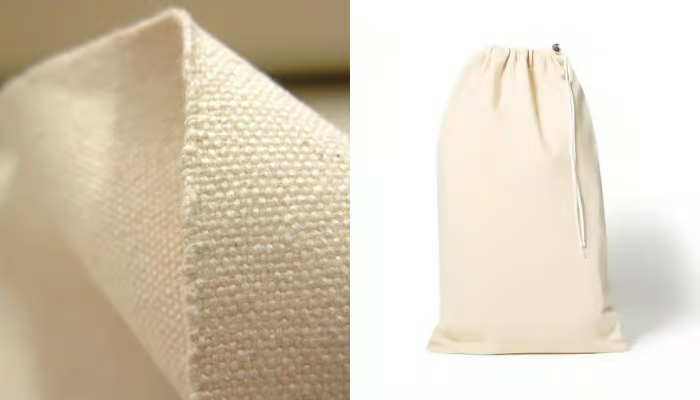
Canvas is a heavy-duty woven fabric, usually made from cotton or cotton-blend yarns. Its dense weave creates a firm body, visible textile texture, and stronger structure than many lightweight fabrics. Canvas drawstring bags can hold books, groceries, accessories, and heavier product kits with less sagging, so they are often used for dust covers, retail merchandise, private label collections, and premium promotional gifts.
Canvas is thicker and heavier, so it may increase shipping weight and carton space in large orders. It can also wrinkle, absorb moisture, and take longer to dry if untreated. Waxed or coated canvas can improve light water resistance, but that finish may also change the fabric’s feel, color tone, and cost.
PP Non-Woven

PP non-woven fabric is made from polypropylene fibers bonded together through heat or mechanical processes. It is lightweight, cost-friendly, and suitable for high-volume promotional drawstring bags, event giveaways, trade show kits, and short-term packaging projects.
Its main advantage is cost efficiency. PP non-woven drawstring bags can support large-quantity orders while keeping the bag light and easy to distribute. However, this material is not designed for heavy loads or long-term repeated use, so it should match the project’s actual durability needs.
RPET

RPET is recycled polyester made from post-consumer PET materials, often including plastic bottles. It keeps many practical features of polyester, such as light weight, smooth texture, and daily durability, while supporting a recycled material direction.
RPET drawstring bags feature a smooth, premium fabric finish that eliminates any recycled or coarse texture, making them indistinguishable from virgin materials and ideal for retail merchandise or eco-friendly packaging lines. If recycled material is part of the product claim, proper documentation such as GRS certification should be checked when required.
Special Fabrics

Special fabrics are used when drawstring bags need a stronger decorative feel, softer product presentation, or more distinctive brand image. These materials are common in gift packaging, jewelry pouches, beauty product sets, luxury accessories, holiday packaging, and retail presentation bags.
- Velvet: The soft, cushioned pile provides excellent scratch protection. It is ideal for jewelry drawstring pouches, cosmetic packaging, and luxury gift bags.
- Satin: Smooth texture and subtle shine make satin suitable for beauty products, fragrance sets, fashion accessories, and decorative retail packaging.
- Silk: This lightweight natural fabric has a refined sheen and gentle touch. It is usually selected for higher-end gift pouches and premium packaging projects.
- Suede: The matte, slightly brushed surface gives drawstring pouches a warmer and more tactile look.
- Linen: Visible woven texture and breathable hand feel support a natural visual direction. Linen drawstring bags suit organic products, handmade goods, lifestyle packaging, and simple retail presentation.
- Jute: Coarse natural fibers create a rustic, earthy appearance. Jute works well for eco-style gift packaging, agricultural products, handmade items, and natural product presentation.
How Are Drawstring Bags Used in Different Business Scenarios?
A drawstring bag may look simple, but its value changes with the project scenario. In this section, I will introduce four common business uses: promotional and giveaway programs, trade show and event kits, sports and fitness programs, and retail and private label collections, showing how drawstring bags support different project goals in practical business settings.
Promotional and Giveaway Programs

Drawstring bags serve as highly cost-effective marketing tools for high-volume corporate giveaways and brand awareness campaigns. Businesses across various industries distribute lightweight polyester or non-woven drawstring bags because they offer a massive, highly visible printing surface for corporate logos and slogans.
Unlike single-use paper or plastic bags, a durable promotional drawstring bag is repeatedly reused for grocery shopping, day trips, or daily commuting. This continuous reuse transforms the bag into a mobile billboard, generating thousands of organic brand impressions on streets and public transit at a very low cost per impression.
Trade Show and Event Kits
At conventions, trade shows, and corporate conferences, organizers widely use drawstring bags as the official event welcome kit to hold brochures, badges, and promotional merchandise. In this scenario, front-panel visibility matters.
A clear logo, readable artwork, and suitable color contrast can help the event bag look organized and professional in a busy venue. Before the event starts, bulk-packed or color-sorted drawstring bags can help event teams prepare registration kits faster and reduce sorting mistakes during distribution.
Sports and Fitness Programs

Within the commercial fitness sector and institutional education markets, drawstring bags are a staple for membership enrollment kits, team merchandise programs, and athletic merchandising.
Lightweight mesh and nylon drawstring bags are ideal for holding sweaty workout gear, water bottles, and clean athletic shoes, keeping them isolated from other personal items. These bags are frequently integrated into private-label team wear collections, customized with club logos or player numbers to drive merchandise sales and foster brand loyalty among members.
Retail and Private Label Collections
In the retail sector, private label brands utilize premium drawstring pouches and bags as high-end, sustainable alternative packaging to traditional cardboard boxes. Fashion boutiques, luxury jewelry brands, and organic skincare lines select refined textiles like velvet, linen, satin, or RPET to enhance the unboxing experience and elevate their perceived product value.
These custom drawstring pouches serve a dual purpose, acting first as an eye-catching retail presentation on store shelves, and later as a permanent, protective storage bag that customers keep at home. This extended lifecycle keeps the retail brand top-of-mind long after the initial purchase.
What Custom Options Are Available for Drawstring Bags?
Custom drawstring bags can be adjusted by size, fabric specification, logo method, structural details, and packaging format. A good custom plan begins with the bag’s intended use, expected load capacity, visual position, and delivery method. Once these points are clear, size, fabric, printing, cord design, stitching, and packing can be selected with fewer production risks.

Size and Capacity
Drawstring bag size controls the basic fit, while shape affects usable capacity. A flat drawstring bag and a gusseted drawstring bag may look similar from the front, but the actual loading space can be very different. For small pouches, dimensions are usually enough. For standard drawstring bags, approximate liter capacity gives a clearer reference.
| Size Reference | Approx. Capacity | Best Fit |
| 10 × 15 cm | Small item packaging | Jewelry, samples, small accessories |
| 15 × 20 cm | Small item packaging | Cosmetics, gifts, light product sets |
| 25 × 30 cm | Around 2–4L | Gift sets, apparel accessories, retail packaging |
| 33 × 40 cm | Around 8–10L | Brochures, T-shirts, giveaways, event kits |
| 35 × 45 cm | Around 10–12L | School kits, retail merchandise, light sports items |
| 40 × 50 cm | Around 15–20L | Sportswear, towels, shoes, uniforms, fitness kits |
| Gusseted drawstring bag | Higher usable capacity | Product sets, thicker packaging items, gift bundles |
Maximum Imprint Area
For custom designs on standard drawstring bags, the available print zone is typically up to 8 inches wide by 13 inches high on the front panel. This generous area allows logos, slogans, and graphic artwork to stand out clearly—ideal for bold branding, sponsor credits, or intricate promotional visuals. By maximizing this print space, organizations can ensure their message remains visible from a distance, making every bag an effective mobile advertisement.
Surface Finish Options

Surface finish is another way to adjust the visual style, hand feel, and perceived quality of a drawstring bag. Without changing the basic bag structure, different finish options can make the same fabric look more casual, sporty, natural, premium, or retail-ready.
- Matte Finish: Low shine creates a clean, calm, and understated look without strong light reflection.
- Glossy Finish: A reflective surface gives the bag a good, vivid, and noticeable visual effect.
- Water-Resistant Coating: A smooth coated layer adds a technical feel and helps resist light moisture, dust, and surface stains.
- Textured Finish: Visible grain, weave, or grid patterns add depth and structure to the bag’s surface.
- Metallic or Pearlescent Finish: Shine, reflection, or subtle color shifts create a decorative and eye-catching surface.
Logo Printing Methods

Logo printing is one of the main ways to adjust the brand appearance of a drawstring bag. The right method should match the fabric texture, artwork detail, color quantity, order volume, and visual effect required for the project.
- Screen Printing: Solid color coverage and clean edges make this method suitable for simple logos, text, and one-color or a few-color artwork.
- Heat Transfer: Shows detailed graphics, gradients, and multi-color artwork with a smooth printed surface, suitable for designs that need clearer image expression.
- Sublimation: Allows full-surface patterns and vivid colors on polyester fabric, with the artwork becoming part of the fabric surface rather than sitting as a thick layer.
- Embroidery: Adds raised texture and a stitched finish, giving the logo a stronger tactile feel and a more durable appearance on thicker fabrics.
- Foil Stamping: Metallic foil gives the logo a gold, silver, or colored reflective effect for gift packaging, holiday bags, and retail drawstring wine bags.
- Woven Labels: Create a neat brand label effect, often used when the logo needs to look subtle, consistent, and apparel-style.
- Rubber or PVC Patches: Add a dimensional logo effect with a sporty or outdoor-inspired look, especially for drawstring backpacks and active-use bags.
Imprint Color Options
When customizing your drawstring bag, the number and choice of imprint colors can make a major difference in the final visual impact. You can typically choose from:
- Single-Color Imprints: Clean and cost-effective, ideal for straightforward branding or minimalist designs.
- Multi-Color Imprints (2-4 colors): Great for logos with additional detail, without overwhelming the bag surface.
- Unlimited Imprint Colors (5 or more): Perfect for complex artwork, vivid gradients, or when you want your logo to stand out with full-spectrum vibrancy.
Print Position Choices
Selecting where your logo appears on the bag is just as important as the printing method or color. The most common positions include:
- Front Side Only: The standard choice for maximum visibility and focus on a single main logo or graphic.
- Both Front and Back: Doubles the branding space and works well for events, promotions, or when you want different designs or messages on each side.
If you’re using both sides, consider how the bag will be carried and which side will be most visible in real use.
By matching your print method, color selection, and print position to your artwork and intended use, you can create a drawstring bag that truly stands out and matches your project’s goals.
Structural and Functional Details

Structural details help adjust how a drawstring bag opens, closes, carries weight, and holds its shape. The right details should match the bag’s actual use, because small changes in cords, stitching, gussets, pockets, or lining can directly affect comfort, durability, and practical value.
- Cord Type: Round cords, flat cords, cotton cords, PP cords, or polyester cords can change the pulling feel, shoulder comfort, and overall appearance.
- Cord Lock or Toggle: A small locking part can help keep the opening tighter, especially when the bag needs extra closure control.
- Reinforced Corners: Extra stitching, triangle patches, or metal eyelets can strengthen the lower cord connection area on drawstring backpacks.
- Bottom Gusset: A gusseted bottom adds depth to the bag, helping it hold thicker products or larger item sets without looking too flat.
- Zipper Pocket: An outer or inner zipper pocket adds storage space for small items, cards, keys, or tickets.
- Lining: An inner lining can improve structure, reduce direct fabric friction, and make the bag feel more finished.
- Name Tag or ID Window: This detail helps with sorting, team use, school programs, event kits, or group distribution.
Packaging and Bulk Order Support
Packaging can also be customized for drawstring bags, especially when the order needs retail presentation, warehouse sorting, or brand-ready delivery. The packing method should match how the bags will be shipped, stored, displayed, or distributed after production.
For promotional and large-volume orders, bulk packing can reduce extra packaging material and control carton volume. For retail or private label projects, individual polybags, paper sleeves, hang tags, brand cards, barcode labels, or SKU stickers can make each bag easier to identify, display, or resell.
Wholesale orders may also need carton marks, color-separated packing, mixed-color ratios, inner box packing, or shipment labels. These details help the order move from factory production to warehouse handling and final distribution with fewer mistakes.
Pricing Options for Drawstring Nylon Tote Bags
When planning your order, pricing will vary depending on whether the bags are customized with your logo or left blank, and—no surprises here—quantity makes a big difference.
Custom Nylon Tote Bags: Ordering a small batch? Expect higher per-bag costs, typically starting just above $4 each at 12 pieces. As your quantity increases, the price drops sharply—commonly landing just under $1 per bag once you reach larger volumes, like 5,000 or 10,000 units. This reflects the bulk efficiencies of screen printing, heat transfer, or embroidery production.
Blank Nylon Tote Bags: If you don’t need custom decoration, blank drawstring nylon totes start less expensive—around $2.30 for a dozen, and dipping well below $1 each for orders of several hundred or more. Orders of 10,000 pieces or above often see pricing bottom out near $0.65 each.
Key Takeaways:
- Smaller orders (under 100 pieces) incur higher unit costs, regardless of printing.
- Customization always slightly increases costs versus blank bags.
- Larger volumes make the most out of scale—big savings once you pass the 500, 1,000, or 5,000-piece marks.
For project planning, it pays to weigh the difference between blank and custom, and to calculate price breaks alongside factors like packaging, structural details, and delivery.
Minimum Order Quantity for Drawstring Nylon Tote Bags
When planning your project, it’s important to consider order requirements upfront. For most custom drawstring nylon tote bag orders, the minimum quantity typically starts at 12 pieces per design. This low threshold allows you to test designs, run pilot programs, or support small events without committing to large stock.
Smaller minimums are ideal for custom samples, boutique retail launches, or team packs where flexibility matters. For larger corporate campaigns or widespread distribution, bulk options start at higher volumes—often accompanied by greater discounts and broader color or size options. If you have a unique request or need a special minimum for a specific project, many suppliers can accommodate with advance notice.
What Can Affect Shipping Timelines?
While the delivery date offered is a helpful planning tool, keep in mind that actual arrival times may vary based on a few common hiccups in the order process. Delays occasionally pop up due to:
- Awaiting final approval on designs or order details—especially if there are changes or artwork proofs to review.
- Incomplete payment or payment method verification, which can hold your order in queue.
- Requests for additional information—such as missing shipping addresses, customization notes, or clarification on special instructions.
- Custom or complex orders that require extra production time or detailed confirmation before moving forward.
When timelines are tight, or you have a firm delivery window, it’s a good idea to double-check your order approval and payment status, and keep an eye on messages from your account rep. Addressing any of these factors early can help keep your project on schedule and your drawstring bags headed your way with minimal surprises.
What Information Do You Need to Estimate Delivery Cost and Date?
Accurately estimating delivery costs and timelines for your drawstring bag order depends on a few essential pieces of information. Before your order can ship, you’ll want to have the following details at the ready:
- Shipping Country: Knowing your delivery destination helps determine available shipping methods, customs processing, and transit time.
- Postal or Zip Code: This ensures precise shipping rates, estimated delivery windows, and route planning, especially for international or remote locations.
- Preferred Delivery Date: If you have a target in-hand date—especially for events, launches, or gifting—let your supplier know early. Some production options, like rush or expedited services, hinge on this requirement.
- Order Status: Keep in mind, delivery calculations assume your order is fully confirmed and paid. Delays can occur if designs await approval, payment is pending, or any part of the order process stalls.
- Cut-off Times for Rush Orders: If you need a speedy turnaround, be aware of specific order cut-off times—typically stated in the supplier’s time zone (for example, 12 PM CST)—to ensure your project qualifies for expedited production.
By providing these specifics up front, you can receive the most accurate shipping rates and realistic delivery timelines for your project.
Global Shipping Availability
Wondering where your custom drawstring nylon tote bags can be delivered? Good news—these versatile bags aren’t just limited to your city or even your continent. We offer international shipping to a wide range of destinations, so your order can reach nearly any corner of the globe.
Popular shipping destinations include:
- United States, Canada, and Mexico
- Most European countries such as Germany, France, the United Kingdom, Italy, Spain, Sweden, and many more
- Asia-Pacific locations like Australia, Japan, South Korea, Singapore, Indonesia, and China
- Latin America and the Caribbean, including Brazil, Argentina, Chile, and the Bahamas
- Middle Eastern countries including the United Arab Emirates, Israel, Saudi Arabia, and Qatar
- African countries such as South Africa, Nigeria, Egypt, and Kenya
Whether you need bags shipped to major metropolitan hubs or more remote islands and territories, we’re equipped to handle it. Need your order sent to New Zealand, Switzerland, Jamaica, or even Fiji? No problem—worldwide shipping coverage ensures you can get your custom bags where you need them, for any project or event.
If you have a specific location in mind or want to confirm shipping to a less common destination, just reach out to our team. We’ll help ensure your custom bags arrive right at your doorstep, wherever the map takes you.
How to Choose the Right Drawstring Bag for Your Project?
Choosing the right drawstring bag starts with the project goal, not the bag style alone. This section explains how to choose a drawstring bag based on project purpose, target user, carrying needs, quality level, and sample review.

Define the Main Purpose of the Bag
The purpose of the bag should come before fabric, size, or logo decisions. A drawstring bag for promotional giveaways usually needs a simple structure, clear logo visibility, and cost control. A retail drawstring bag needs better texture, cleaner finishing, and stronger product presentation.
Different purposes create different quality standards. Event bags can use lighter fabric and simpler stitching when they only carry brochures, samples, or small gifts for a short period. Sports bags need stronger fabric, smoother cords, and reinforced stress points because shoes, towels, uniforms, or training items create more pulling pressure.
Product packaging bags need to fit the item neatly while improving the overall presentation. The right drawstring bag should match the real job it needs to do. If the purpose is unclear, the final product may become too thin, too large, too costly, or too basic for the intended use.
Identify the Target User and Carrying Needs
The project channel and final user group should guide the drawstring bag selection. A drawstring bag made for a promotional company, event agency, retail brand, sports supplier, school distributor, or wholesale program will not follow the same quality standard or cost structure.
- Promotional Product Companies: Lightweight, clear logo exposure, and stable cost control usually matter most, since these bags often support campaign materials, samples, or high-volume giveaways.
- Event Agencies and Trade Show Buyers: Registration kits, sponsor inserts, notebooks, badges, and brochures require enough front-panel space and a packing plan that supports fast distribution on site.
- Sports Brands and Team Suppliers: Towels, uniforms, shoes, bottles, and training items place more pressure on seams, cords, and lower corners, so the bag needs stronger structural support.
- Retail Brands and Private Label Buyers: The bag must feel consistent with the product line. Fabric texture, stitching neatness, color control, and logo quality can influence whether the item looks retail-ready.
- School and Institutional Distributors: Repeat programs usually need capacity, durability, clear identification, and bulk consistency across different colors, grades, teams, or activity kits.
Select Fabric Strength Based on Bag Usage
A practical selection should consider three points: fabric weight, expected load, and stress areas. If the bag carries heavier items, the fabric should resist tearing, and the seams should stay stable after repeated pulling. If the cord also works as a shoulder strap, the lower corners need extra reinforcement.
- PP Non-Woven: Best for budget volume. 60 GSM for single-use giveaways; 70–80 GSM for trade show standards; 90+ GSM for heavy event packages.
- Cotton: Ideal for sustainable lifestyle gifts. 120–140 GSM for jewelry/cosmetic pouches; 160–200 GSM for retail-grade bags; 220+ GSM for premium boutique items.
- Canvas: Premium option for high-perceived value. 6 oz for soft foldable bags; 8–10 oz for standard retail lines; 12+ oz for heavy-duty merchant gear (increases freight volume).
- Polyester: The industry benchmark for general promotions. 190T/210D for mass event giveaways; 420D for regular fitness kits; 600D for structured, rigid backpacks.
- Nylon: High-end performance choice for active outdoor use. 210D for sleek travel pouches; 420D for heavy-duty sports bags; Ripstop weave for maximum anti-tear protection.
- RPET: Top pick for corporate sustainability (CSR) campaigns. 210D for eco giveaways; 300D–420D for standard corporate merchandise; 600D for high-end retail bags.
Match Quality Level with Project Positioning
Quality level should match the commercial position of the drawstring bag. For high-volume promotional projects, lightweight polyester, PP non-woven, or basic cotton can support clear logo exposure and controlled unit cost. Retail and private label projects need a stronger quality baseline because the bag becomes part of the product’s perceived value.
Velvet, satin, canvas, ripstop nylon, coated fabrics, or OEKO-TEX Standard 100-certified cotton can support stronger presentation when the project targets gift packaging or lifestyle merchandising. The best quality level is not always the highest one. It is the level that protects the buyer’s budget while delivering the right product impression for the target market.
Confirm Samples Before Bulk Production
Sample review is the final checkpoint before bulk production. Before approval, the sample should be checked for size, shape, fabric feel, cord movement, seam strength, logo effect, and packing method.
The drawstring bag should also be tested with the actual items it needs to carry. This helps confirm whether the opening closes smoothly, the fabric holds the right shape, the seams stay stable, and the logo looks correct on the finished surface.
A sample should not be approved based solely on photos. The approved sample should become the production standard for bulk orders, helping reduce risks such as wrong sizing, color deviation, weak stitching, logo misplacement, or incorrect packing.
How to Care for and Maintain Drawstring Bags?

Drawstring bag care should match the material and logo method. Following specific technical care guidelines prevents material degradation and maintains your corporate brand image across all custom product categories.
- Synthetic Fabrics (Polyester/Nylon): Wash below thirty degrees Celsius to protect internal PU water-resistant coatings and custom logos. Avoid bleach or industrial softeners that strip technical finishes, and always air-dry to prevent machine heat from warping synthetic fibers.
- Natural Fabrics (Cotton/Canvas): Use cold water to mitigate severe fabric shrinkage and the bleeding of custom Pantone-matched fabric dyes. Hang dry away from direct sunlight to avoid UV fading, and never tumble dry as contraction will permanently jam the top cord mechanism.
- Premium Boutique Pouches (Velvet/Satin/Silk/Suede): Restrict full laundering and utilize gentle spot-cleaning with a damp microfiber cloth to protect delicate surfaces. For velvet and suede drawstring bags, use a soft-bristled brush after cleaning to restore the premium fabric pile and maintain upscale retail presentation.
- Bulk Inventory Storage: Store bags completely uncinched and flat in dry warehouses to prevent mold development and logo sticking. Logistics teams should routinely inspect high-stress areas, such as bottom metal eyelets and plastic toggles, for cord fraying to prevent fabric tearing during mass distribution.
Why Work with Gentle Bags for Custom Drawstring Bags?
Working with Gentle Bags helps you manage drawstring bag development from material selection to bulk delivery. We support fabric sourcing, size adjustment, logo method matching, sample development, production follow-up, quality control, and export packing, so your custom drawstring bags can match your target market, order quantity, and brand requirements.
Whether you need promotional drawstring bags, retail pouches, sports drawstring backpacks, or private label packaging bags, our team can help turn your design idea into a workable production plan. You have complete flexibility to:
- Start with a Blank Product: Choose your material and bag style as a fresh canvas.
- Upload Your Own Design: Already have artwork ready? Easily send us your files for precise reproduction.
- Use Our Design Studio: Not a designer? No problem. Our intuitive studio lets you add text, clipart, and adjust layouts to visualize your perfect bag.
- Get Professional Design Help: Prefer a hands-off approach? Our in-house team can craft a custom design and send you proofs for approval—making sure your branding shines.
- Finalize Details Later: Not ready with artwork? Reserve your order now and upload your design files after checkout for stress-free planning.
We streamline every step, from initial concept to approved samples and production, ensuring your specifications are met and you get exactly what you envision. Contact us to discuss your material, logo, sample, quantity, and delivery needs.
Conclusion
Drawstring bags are useful because they bring together simple structure, flexible materials, easy carrying, and strong branding space in one product. From polyester and nylon to cotton, canvas, PP non-woven, RPET, and special fabrics, each material gives the bag a different texture, strength, cost level, and presentation style.
Drawstring bags also come in a wide array of types and styles to fit every application and brand vision:
- Classic Drawstring Backpacks: Durable and lightweight, often made from nylon or polyester for sports teams, events, and school giveaways.
- Cotton and Canvas Drawstring Pouches: Ideal for eco-conscious brands and boutique packaging, offering a natural look and feel.
- Non-Woven and PP Drawstring Bags: Affordable and practical for large-scale promotions or trade shows.
- Clear PVC Drawstring Bags: Perfect for stadium events or venues with security requirements.
- Fashion Styles: Camo prints, tie-dye swirls, and two-tone designs add visual appeal for retail or youth markets.
- Specialty Sports Bags: Options with bottle holders or reinforced corners cater to athletic and travel needs.
- Custom Shapes and Sizes: From small gift pouches to oversized totes, dimensions can be tailored to match your project requirements.
Selecting the right combination of material, style, and size ensures your drawstring bag not only serves its intended function but also enhances your brand presentation.
A well-planned drawstring bag should not stop at basic appearance. The material, size, surface finish, logo method, structure, packing, and quality level all need to support the same project goal. When these details work together, custom drawstring bags can serve promotional programs, event kits, sports projects, retail collections, and private label packaging with stronger practical and brand value.