
Choosing between nylon and canvas bags is not simply a matter of appearance. Both materials can produce durable bags, but they behave differently under abrasion, heavy loads, moisture, repeated handling, and long-term use. For sourcing teams and brands, the wrong material choice can raise replacement costs or limit product performance.
Last Updated on September 23, 2026, by Gentle Bags Team
This guide compares nylon vs canvas bags across durability, weather resistance, fabric specifications, weight, maintenance, and common applications. It will help you match the material to your bag design, use conditions, branding needs, and production requirements.
What Is Nylon?

Nylon is a family of synthetic polyamide fibers first developed commercially in the 1930s. In bag manufacturing, nylon filaments are woven into lightweight, flexible fabrics that offer strong abrasion performance and relatively low moisture absorption. These properties make nylon bags a common choice for duffel bags, outdoor backpacks, and utility bags that need to handle repeated movement and friction without adding excessive weight.
In bag production, nylon is categorized by Denier (D), such as 210D, 420D, and 1000D. While higher denier signifies thicker, heavier yarn, the fabric’s ultimate durability depends equally on weave density and pattern.
Common nylon options for bags include standard woven nylon for everyday products, ripstop nylon with a reinforced grid that helps limit tear propagation, and ballistic nylon for heavy-duty applications. PU or PVC coatings can also be applied to improve water resistance, surface protection, and fabric body, depending on the coating weight and construction.
What Is Canvas?

Canvas is a durable, tightly woven fabric traditionally made from natural fibers such as hemp, linen, and cotton. Today, cotton canvas and cotton-polyester blends are widely used for bags because their dense plain weave creates a firm structure, substantial hand feel, and strong resistance to everyday wear.
Unlike synthetic fabrics measured in denier, canvas bags are graded by physical mass, typically specified in ounces per square yard (oz) or grams per square meter (GSM). This weight metric directly dictates the bag’s final silhouette and structural integrity. Bag projects often use about 8 oz for lighter totes and 12–18 oz for more structured or heavy-duty designs. Weave density and fiber composition also affect strength and durability.
Evolution of Military Bag Materials
The history of military bags illustrates a clear shift in material preference over time, driven by changing demands on durability, weatherproofing, and performance. Early on, rugged canvas was the undisputed material of choice—its tight-weave construction, breathability, and substantial hand feel made it the standard for generations of military backpacks, duffels, and field gear throughout the early to mid-20th century.
However, as combat requirements evolved—especially under the harsher, more mobile conditions experienced from the Korean War onwards—so did fabric technology. Nylon entered the scene, gradually replacing canvas for many military and tactical bags. The reasons were practical: nylon offered better water resistance, lighter weight, improved flexibility, and heightened resistance to both tearing and mildew. These attributes allowed soldiers to move more freely and keep their equipment protected in unpredictable environments.
Today, most contemporary military and tactical packs favor high-denier nylons (including ripstop and ballistic variants) for their combination of abrasion resistance, structural integrity, and weather protection. That said, heavy canvas remains in use for specific applications where structure and a natural fiber hand are prioritized, but the shift toward technical synthetics—and their ability to withstand the rigors of modern field use—has become the new norm.
Which Is More Durable: Nylon or Canvas?
Nylon generally performs better against abrasion and tearing, while heavy canvas offers strong load support and firmer structure. To judge which material is more durable for a specific bag, you need to compare abrasion, tear strength, load capacity, long-term stability, and the reinforcement used in the finished construction.

Abrasion and Surface Wear
Repeated rubbing generally causes less visible surface wear on nylon bags than on cotton canvas bags. This makes nylon particularly suitable for bags that regularly contact floors, luggage racks, work surfaces, or outdoor equipment.
Canvas bags can withstand daily wear, but the outer fibers tend to soften, scuff, and polish over time. Heavy duck canvas improves abrasion performance, yet nylon remains the better choice when the bag will face frequent friction.
Tear and Puncture Resistance
Nylon bags generally offer better tear resistance, especially in ripstop or high-denier constructions. The fibers can flex under stress, which helps prevent a small cut or tear from spreading quickly.
Heavy canvas can resist punctures because of its thickness, but once the weave breaks, the tear can continue along the yarn structure. For sharp-edge exposure or repeated pulling, nylon usually gives you more safety margin.
Load-Bearing Capacity
Heavy canvas is well suited to dense, static loads because its firm body helps the bag remain stable around tools or equipment. Nylon bags can achieve comparable finished-bag carrying performance at a lower shell weight when combined with reinforced webbing, bartacks, bottom panels, and strong seams.
However, neither 600D, 1000D nylon nor 12–18 oz canvas has a universal load rating in kilograms. Safe load capacity must be determined from the complete bag construction and verified through finished-bag load testing.
Long-Term Structural Stability
Canvas bags have a clear advantage in maintaining a firm, structured shape over time. Thick canvas keeps a firmer silhouette and resists collapsing, which is useful for totes, work bags, and structured retail products.
Nylon bags stay flexible and handle movement well, but lighter grades can lose shape without lining, foam, or internal reinforcement. For a soft travel bag, that flexibility is useful; for a boxy structured bag, canvas usually performs better.
Construction and Reinforcement
Neither fabric can compensate for weak construction. In bag production, seam design, bartacks, reinforced handles, bottom panels, and stress-point backing often determine where failure happens first.
A well-built 600D nylon bag can outperform a heavier canvas bag if the canvas construction uses weak handle stitching or insufficient stress-point reinforcement. Likewise, a reinforced 16 oz canvas tool bag can outperform thin nylon in a static heavy-load application.
Nylon vs Canvas Bags: Weather and Moisture Resistance
When weather exposure matters, nylon bags generally perform better than untreated canvas. It absorbs less water, dries faster, and is easier to enhance with water-resistant coatings. Canvas bags can still perform well outdoors, but it usually needs wax, PU coating, or another treatment to achieve comparable moisture protection.

Water Absorption and Moisture Exposure
Nylon bags have the clear advantage in wet conditions. It absorbs much less moisture than cotton canvas, so the fabric stays lighter and changes less after rain, splashes, or humid storage.
Untreated canvas can absorb water into the fibers and become heavier when wet. Repeated exposure to moisture may also soften the fabric and alter its shape, especially in cotton-based canvas. For outdoor bags, travel bags, and products used in humid climates, nylon usually gives you better baseline moisture performance.
Drying Speed and Mold Risk
Nylon dries faster because its fibers absorb and retain less moisture. After rain, cleaning, or repeated outdoor exposure, the fabric releases moisture more quickly, so the nylon bag can return to use sooner with less maintenance.
Canvas holds more water, especially at heavier fabric weights, and needs more time to dry. If you fold or store damp canvas with limited airflow, the risk of mildew, odor, and staining increases. For travel bags, outdoor bags, sports bags, and other products that may need to be packed or reused soon after getting wet, nylon offers a clear maintenance advantage.
UV Exposure and Color Fading
Both nylon and canvas are affected by prolonged sunlight, but the damage appears differently. Nylon bags may gradually lose tensile strength and color under extended UV exposure, particularly when the fabric lacks UV-stabilizing finishes. Canvas is more likely to show visible fading, especially in darker or highly saturated dyed fabrics, while its basic structure may remain stable for longer in some applications.
For bags used outdoors for extended periods, neither material should be treated as naturally UV-proof. UV-resistant dyes, stabilizers, coatings, and the expected exposure conditions should be considered when specifying the fabric.
Protective Coatings and Treatments
Coatings can significantly narrow the weather-performance gap between nylon and canvas. Nylon bags are commonly treated with PU, TPU, PVC, or DWR finishes to improve water resistance while keeping the fabric relatively lightweight and flexible.
Canvas can be enhanced with wax, PU, acrylic finishes, or laminated backings to reduce water absorption, but these treatments may also increase stiffness, weight, or maintenance needs. For frequent rain or wet environments, coated nylon usually offers the better balance of low weight and moisture protection, while treated canvas is better suited to projects that prioritize a heavier structure and more rugged appearance.
Weight and Carrying Differences Between Nylon and Canvas Bags
Nylon and canvas differ noticeably in fabric weight, flexibility, and carrying feel. Nylon bags are generally lighter and easier to compress, while canvas bags have a heavier, firmer structure. For travel, sports, or long periods of carrying, nylon usually offers the weight advantage. Canvas works better when a substantial hand feel and structured appearance are more important.

Fabric Weight
Nylon bags are generally lighter than canvas bags of a similar size. Nylon fabrics are commonly specified as 210D, 420D, 500D, or 1000D, while canvas is usually measured by finished fabric weight, often around 8–18 oz depending on the required structure.
For reference, 10 oz canvas is about 339 GSM, 12 oz about 407 GSM, and 16 oz about 542 GSM. That extra fabric mass becomes especially noticeable in large totes, backpacks, and travel bags.
Because denier measures yarn linear density rather than finished fabric weight, it should not be compared directly with canvas GSM. If low empty weight is the priority, nylon bags have the clear advantage; if the design requires a firmer, more self-supporting structure, canvas bags are the better fit.
Flexibility and Packability
Nylon bags are more flexible and compressible than canvas bags, giving them a clear advantage for compact storage. Even heavier nylon fabrics such as 1000D can usually be folded or rolled into a smaller space and recover their shape with relatively little permanent creasing. This makes nylon practical for travel bags, tactical gear, secondary carry bags, and other designs that may need to fit into lockers, luggage, or limited storage areas.
Canvas bags have a firmer structure, particularly when made from heavyweight, double-fill, or waxed canvas. They occupy more space when folded and tend to retain visible crease lines, but that stiffness helps totes, tool bags, and other structured styles remain upright during use. In short, nylon offers better packability, while canvas provides stronger shape retention.
Carrying Comfort
Nylon bags provide better comfort for long periods of carrying because they combine low weight with a smooth, flexible surface. The fabric creates less friction against clothing, absorbs little moisture, and works well with padded straps or air-mesh back panels to improve ventilation during commuting, hiking, and travel.
Canvas bags feel heavier and can be stiff when new, especially in heavy-duty constructions, but the cotton fibers gradually soften with repeated use and conform more closely to the body. Their textured surface also gives shoulder straps a more stable, non-slip feel. For heavy loads, however, strap width, padding, and weight distribution still have a greater impact on comfort than the choice between nylon and canvas alone.
Cleaning and Maintenance of Nylon vs Canvas Bags

Nylon bags are easier to clean and maintain than canvas bags because they absorb less moisture, release surface dirt more easily, and dry faster after washing. Routine cleaning usually requires only mild soap, cool water, and a soft cloth or brush. Mud, dust, and light spills tend to stay near the surface, although coated nylon still needs gentle cleaning to protect PU, TPU, DWR, or other finishes.
Canvas bags need more careful treatment because natural cotton fibers absorb water, cleaning solution, oil, and odors more readily. Spot cleaning or gentle hand washing is safer than heavy soaking, especially for dyed, waxed, printed, or structured canvas. Stains should be treated early, and the fabric needs enough drying time to prevent lingering odor or mildew.
Storage also differs between the two materials. Nylon bags can be folded or compressed once fully dry, while canvas bags benefit from better airflow and looser storage to reduce deep creasing, discoloration, and trapped moisture. Waxed canvas may also require periodic reproofing as the protective surface wears down.
For bags that require frequent cleaning or repeated outdoor use, nylon has the lower maintenance burden. Canvas remains practical for lifestyle, retail, and work applications, but it requires gentler cleaning and more careful drying and storage.
Nylon vs Canvas Bags: Performance Comparison Summary
The table below summarizes the main differences between nylon bags and canvas bags across durability, weather performance, weight, carrying comfort, and maintenance. It gives you a quick reference before comparing which material fits a specific bag application.
| Performance Factor | Nylon Bags | Canvas Bags |
| Abrasion Resistance | Strong surface wear performance | Durable with visible surface aging |
| Tear Strength | Strong, especially in ripstop and high-tenacity constructions | Strong in heavy, dense weaves |
| Load Support | Strong with reinforced seams and stress points | Firm support for dense, static loads |
| Structural Silhouette | Flexible; may need lining or reinforcement | Firm and naturally self-supporting |
| Moisture Response | Low moisture absorption | Noticeable absorption in untreated cotton canvas |
| Drying Speed | Short drying cycle | Extended drying cycle |
| Mold & Mildew Risk | Limited with proper drying and storage | Requires thorough drying and airflow |
| Fabric Weight | Low shell weight | Substantial fabric weight |
| Packability | Flexible and compressible | Firm and bulky |
| Carrying Ergonomics | Lightweight and smooth | Structured and textured |
| Stain & Odor Removal | Simple routine cleaning | More attention to absorbed stains and odors |
| Long-Term Maintenance | Straightforward routine care | Careful drying and storage required |
Material Science and Manufacturing Expertise in Bag Selection
Selecting the ideal material for a bag isn’t simply a matter of preference—it’s a technical decision informed by material science and hands-on experience. A deep understanding of textile properties, stress points, and construction techniques enables designers to align material choice with real-world requirements.
For example, evaluating tensile strength, abrasion resistance, and moisture response helps industry professionals recommend the optimal fabric for specialized uses. A canvas bag engineered for rugged fieldwork—like a Filson duffle or a Carhartt tool tote—might rely on tightly woven, heavyweight cotton for uncompromising durability. Conversely, when low weight and weather resistance are priorities, as in Osprey or The North Face travel packs, advanced nylon weaves paired with professional-grade coatings provide better performance.
Manufacturing expertise bridges the gap between laboratory results and daily use. Skilled patternmakers and sewers understand exactly how to reinforce seams, select appropriate linings, and integrate ergonomic features to maximize both material life and user comfort. This technical foundation is essential for choosing not just the right material, but also the right construction method—ensuring each bag meets its intended demands with reliability and longevity.
Nylon vs Canvas Bags for Different Applications
The right material depends heavily on where and how the bag will be used. Travel, outdoor activities, heavy-duty work, retail collections, and promotional projects place different demands on weight, moisture resistance, structure, durability, and branding. The following sections compare nylon and canvas bags across these common applications to show which material is better suited to each use case.
Travel and Commuting

Travel and commuting products need to stay comfortable through frequent carrying, repeated opening, and crowded transport conditions. Nylon bags are usually the stronger choice when low weight, compact storage, and weather exposure matter, especially for products that move between airports, trains, offices, and outdoor environments.
Canvas bags work better when the product needs a firmer silhouette and a more substantial retail feel. That makes it suitable for commuter totes or structured messenger styles, while nylon is more practical for travel backpacks and duffel bags that need to stay light and easy to pack.
Outdoor and Wet Conditions
Outdoor bags face rain, mud, repeated ground contact, and frequent packing in changing conditions. Nylon is usually the better fit when repeated moisture exposure forms part of normal use, while coatings can provide additional protection for more demanding conditions. Coated nylon also offers greater flexibility when the design requires additional weather protection.
Canvas makes more sense when the product is intended to develop a rugged, heritage-style appearance rather than a technical outdoor profile. Waxed canvas can improve moisture resistance, but it adds weight and requires periodic care. For hiking packs, sports bags, and wet-environment carry products, nylon remains the more practical choice.
Heavy-Duty Work Environments
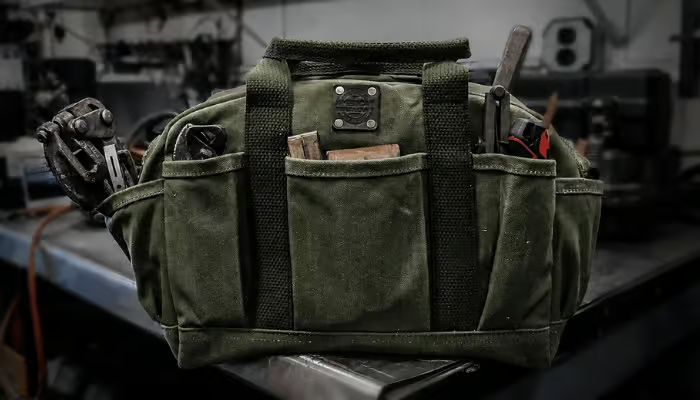
Work bags often carry dense tools, hardware, or service equipment, so the material must support concentrated loads without losing function. Canvas suits applications where a firm body and stable open shape help keep contents organized, especially in tool totes and utility carriers.
Nylon works better when the bag moves frequently between job sites or needs multiple reinforced compartments. A technician backpack or service bag can use heavy-denier nylon with webbing, padded dividers, and reinforced stress points to reduce shell weight while keeping the load controlled.
Everyday Retail and Lifestyle
Everyday retail and lifestyle bags sit at the intersection of function and visual appeal, so material choice often influences how the product is perceived before it is even used. Canvas works particularly well for collections built around a casual, natural, vintage, or craft-inspired aesthetic. Its visible weave and firmer hand feel give tote bags, shoulder bags, and casual carry products a more substantial presence on the shelf.
Nylon creates a different impression. Its smoother surface and lighter construction suit modern, sporty, urban, or minimalist collections where clean lines and easy carrying matter more than a textured fabric appearance. This makes it a practical option for compact crossbody styles, lightweight day bags, and accessories designed for frequent daily use.
Promotional and Branded Projects
Branded and promotional bag projects usually revolve around brand visibility, distribution efficiency, target audience, and expected reuse. Canvas is a strong choice for retail giveaways, event merchandise, corporate gifts, and branded tote programs where the bag should feel substantial enough to remain useful after the campaign. Its textured surface also works well with screen printing, embroidery, and other decoration methods that make the logo a visible part of the product.
Nylon bags fit campaigns where portability and large-volume distribution carry more weight. Drawstring bags, foldable shopping bags, lightweight backpacks, and travel accessories take up less storage space and are easier to transport in bulk. For short-term events or high-volume promotional programs, nylon can keep the finished product practical without creating unnecessary packing bulk.
Key Trade-Offs When Choosing Nylon or Canvas for Custom Bags
Material selection also affects the product beyond basic durability and daily use. Appearance, decoration methods, production cost, and sustainability goals can all shift the final choice between nylon and canvas, particularly for custom retail, private-label, and promotional projects.

Appearance and Brand Positioning
Nylon bags create a cleaner, lighter, and more technical look, which fits sports, travel, outdoor, tactical, and modern lifestyle collections. Smooth surfaces, subtle sheen, and a wide range of deniers allow the finished bag to look either lightweight or highly performance-oriented.
Canvas bags create a more natural, substantial, and tactile appearance. The visible weave works well for lifestyle, heritage, workwear, retail, and premium casual collections where texture is part of the brand identity. Heavier canvas also gives totes, shoulder bags, and utility bags a more structured silhouette.
Printing and Logo Customization
The branding method should match the fabric surface, coating, artwork, and desired finish. Canvas bags are compatible with many common decoration methods, while nylon bags require closer matching between the branding process, surface coating, and heat tolerance. Confirm the logo method with the fabric specification to avoid bonding issues, distortion, or an unsuitable finish.
- Screen Printing: Works well on canvas for bold logos, text, and larger graphics. It can also be used on suitable nylon surfaces after checking coating compatibility.
- Embroidery: Adds texture and a premium finish to both materials. Heavy canvas provides a stable base, while lighter nylon may require backing to control puckering.
- Heat Transfer: Suitable for detailed or multicolor artwork, but nylon fabric and coatings should be tested for temperature tolerance before bulk production.
- Woven Labels: A versatile option for both nylon and canvas bags, especially when consistent branding is required across different product styles.
- Logo Patches: Rubber, PVC, leather, and PU patches create a raised branding effect and work across different bag styles. The patch material can be selected according to the desired appearance, texture, and product positioning.
Cost and Production Requirements
Cost depends on more than the base fabric. Fabric grade, weight, coatings, construction, hardware, branding, and order volume all affect the final unit price. A basic canvas tote can be economical, while heavy canvas with premium trims may cost more than a simple nylon bag; premium coated or ballistic nylon can also increase costs significantly.
- Fabric Specification: Standard nylon and basic cotton canvas usually sit in different cost ranges from ballistic nylon, waxed canvas, recycled fabrics, or specialty blends.
- Coatings and Finishes: PU, PVC, water-repellent, waxed, or laminated finishes add material and processing costs.
- Construction Complexity: Extra compartments, padded panels, reinforced bottoms, webbing systems, and bartacked stress points increase sewing time.
- Branding Method: Large embroidery areas, multicolor printing, molded patches, and custom labels affect decoration costs differently.
- Order Volume: Larger production runs can spread setup, printing, and material preparation costs across more units.
- Packing and Shipping: Heavy canvas can increase carton and freight weight, while bulky structures can affect shipment volume regardless of fabric type.
Sustainability Considerations
Nylon and canvas bags create environmental impacts at different stages of their life cycles. Virgin nylon depends on fossil-based feedstocks and energy-intensive processing, while its synthetic fibers can contribute to microplastic release during manufacturing and use. Nylon also breaks down very slowly at end of life.
Cotton canvas avoids synthetic polymers as its primary fiber source, but conventional cotton cultivation can place pressure on water resources, land, soil health, and pesticide use. These impacts vary considerably by growing region, irrigation method, and farming practices.
For custom bag projects, sustainability decisions should therefore focus on fiber source, recycled content, certification, expected service life, and actual reuse potential. Recycled nylon and recycled cotton can reduce dependence on virgin materials, while standards such as GRS provide clearer documentation for recycled-content sourcing and supply-chain verification.
Conclusion
Nylon and canvas are both durable bag materials, but they suit different priorities. Nylon bags perform well for lightweight, flexible, moisture-prone, and frequently carried products, while canvas is better suited to structured bags, dense loads, lifestyle styling, and applications where fabric texture matters. The final choice should also account for bag construction, branding method, cost, maintenance, and sustainability requirements rather than material alone.
It’s important to note that there’s no universally superior option—each material brings unique strengths depending on your bag’s intended use. For instance, a heavy-duty canvas tote might be ideal for robust carrying needs or a certain aesthetic, while a lightweight nylon pack is often preferred for travel, outdoor use, or any application where water resistance and portability are key.
Ultimately, selecting the best material means considering not just the fabric itself, but also how it aligns with your specific application, target market, and performance expectations. A collaborative approach—evaluating these factors alongside your design and branding goals—will help ensure your custom bag delivers on both form and function.
If you are developing custom nylon or canvas bags for retail, promotional, travel, outdoor, or work applications, contact us to discuss fabric specifications, bag structure, logo options, sampling, and bulk production requirements. Gentle Bags can help you compare suitable materials and develop a bag that matches your target use and market positioning.
FAQs
1. Is nylon more durable than canvas?
Nylon generally offers better abrasion and tear resistance, while heavy canvas provides greater structure and good support for heavy loads. The final durability still depends on fabric grade, stitching, reinforcement, and bag construction.
2. Which material performs better in wet or outdoor conditions?
Nylon is usually the better choice for wet or outdoor use because it absorbs less moisture and dries faster. Coated nylon can further improve water resistance. Untreated cotton canvas absorbs more water and requires more drying time.
3. Does higher-denier nylon always mean better durability?
No. A higher denier usually indicates thicker yarn, but durability also depends on weave density, fiber quality, coating, and construction. A well-made 600D nylon bag can outperform a poorly constructed 1000D bag.
4. Which material is easier to clean and maintain?
Nylon is generally easier to maintain. Dirt and light spills are usually easier to wipe away, and the fabric dries quickly after cleaning. Canvas often requires more careful stain treatment, drying, and storage.
5. Is nylon or canvas better for heavy loads?
Heavy canvas works well for dense, static loads, while reinforced nylon suits heavy loads that involve frequent carrying and movement. For either material, handles, webbing, seams, bartacks, bottom panels, and stress-point reinforcement have a major influence on the finished bag’s load capacity.