
Choosing the right shoulder and crossbody strap length directly affects how a bag sits, feels, and performs during daily use. Many strap issues come from incorrect measurements, such as poor weight distribution, uncomfortable shoulder pressure, or a bag position that does not match its intended function. These problems become more important when developing custom bags for different markets and user groups.
This guide explains standard strap measurements, strap drop, adjustment ranges, and key factors that influence custom bag strap specifications. You will learn how to determine the right strap length for shoulder and crossbody bags before moving into production.
Why Bag Strap Length Matters for Comfort and Functionality?

Bag strap length affects the overall functionality, wearing experience, and design balance of shoulder bags and crossbody bags. An incorrect strap specification may result in poor bag positioning, reduced carrying comfort, or a product design that does not match the expectations of its target users. The correct strap length creates a balance between comfort, functionality, and product positioning.
- Optimized carrying comfort: The strap length directly influences how the bag’s weight is distributed across the shoulder and body. Proper dimensions help reduce excessive pressure and improve comfort, especially for designs intended to carry heavier contents.
- Consistent bag positioning: A well-defined strap length controls the final drop of the bag and keeps the product at the intended wearing position, whether the design focuses on shoulder carry, waist-level crossbody, or lower casual styles.
- Better design compatibility: Strap specifications need to work together with the bag structure, including body dimensions, attachment points, and hardware placement. Incorrect measurements may affect the visual proportion and practical performance of the finished product.
- Improved market adaptability: Brands often target different customer groups with different wearing preferences. Adjustable ranges and suitable strap dimensions allow products to meet broader expectations across regions and market segments.
- Fewer production adjustments: Confirming strap length during the development stage reduces issues during sampling and bulk production, such as incorrect drop position, unsuitable hardware placement, or repeated specification changes.
Shoulder Bag Strap Length Standards
Shoulder bag strap length standards vary depending on the bag size, carrying style, and design purpose. Understanding common length ranges and strap drop measurements helps brands select suitable specifications for different shoulder bag collections, ensuring the final product achieves the expected fit, appearance, and carrying experience.
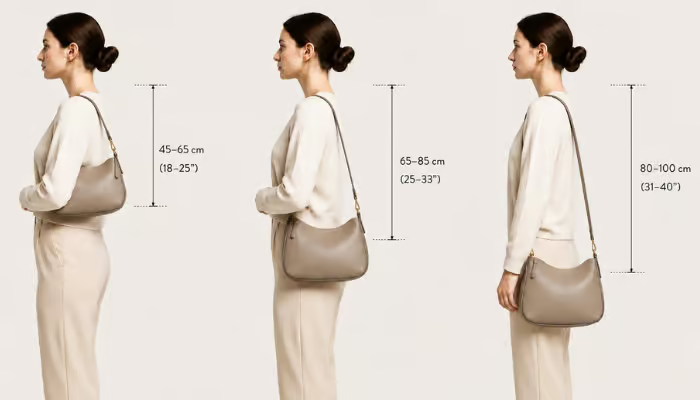
Standard Shoulder Bag Strap Length Range
Shoulder bag straps usually fall within a general length range, but the final specification depends on the bag structure, target users, and desired carrying position. For custom production, brands typically define the strap length based on how the bag should sit on the body rather than selecting a fixed industry number.
| Shoulder Bag Size | Accurate Strap Length Range | Notes |
| Small shoulder bags (Baguette, compact Hobo) | 45–65 cm (18–25″) | Creates a compact silhouette and keeps the bag close to the body. |
| Medium shoulder bags (Daily Tote, Satchel) | 65–85 cm (25–33″) | Provides comfortable access while maintaining a balanced shoulder carry. |
| Large shoulder bags (Oversized Tote, Large Hobo) | 80–100 cm (31–40″) | Provides additional space and movement while remaining suitable for single-shoulder carrying. |
Shoulder Strap Drop and Wearing Position
Shoulder strap drop refers to the vertical distance between the shoulder point and the top edge of the bag when the bag is carried. Unlike total strap length, strap drop reflects the actual carrying result after the bag is worn. Two shoulder bags with the same strap length may create different drops because the bag height, attachment position, and overall structure influence where the bag rests.
| Strap Drop Range | Wearing Position | Common Applications |
| 15–25 cm (6–10″) | Close underarm carry | Mini shoulder bags and compact fashion styles |
| 25–35 cm (10–14″) | Waist or upper side body position | Everyday shoulder bags and handbags |
| 35–40 cm (14–16″) | Lower shoulder carry | Larger shoulder bags with relaxed styling |
Crossbody Bag Strap Length Standards
Standard crossbody bag strap lengths typically range from 100–140 cm (39–55 inches) for adult styles, while adjustable designs provide flexibility for different carrying positions. Compared with shoulder bags, crossbody straps require additional length to extend diagonally across the torso. This section covers common strap length ranges and how different lengths influence the final carrying position.

Standard Crossbody Strap Length Range
Standard crossbody strap lengths vary by bag style, with most adult designs falling within the following measurement ranges:
| Crossbody Bag Size | Typical Strap Length Range | Common Carry Position |
| Small crossbody bags (camera bags, WOC) | 100–120 cm (39–47 inches) | Upper waist or high chest area |
| Medium crossbody bags (daily satchels) | 110–135 cm (43–53 inches) | Natural waist or upper hip bone |
| Large crossbody bags (messenger bags) | 120–150 cm (47–59 inches) | Hip area or resting slightly toward the back |
Crossbody Strap Drop and Carry Position
Crossbody strap drop describes the vertical distance between the shoulder area and the top edge of the bag when the bag is worn diagonally across the body. This measurement helps determine whether the bag sits closer to the chest, waist, or hip area and provides a clearer reference than strap length alone.
| Crossbody Strap Drop | Bag Position | Carrying Effect |
| 20–30 cm (8–12 inches) | Upper chest area | Creates a close-body fit with quick access and limited movement |
| 30–45 cm (12–18 inches) | Waist to upper hip area | Provides a balanced position for everyday carrying |
| 45–60 cm (18–24 inches) | Lower hip area | Offers a relaxed fit with more movement space |
Fixed vs Adjustable Straps for Custom Bags
When developing custom bags, choosing between fixed and adjustable straps affects the product appearance, production process, cost structure, and target market positioning. Fixed straps provide a clean and stable design, while adjustable straps offer greater flexibility for different users and carrying styles.
Fixed straps work well for designs that prioritize appearance and consistent styling, while adjustable straps provide better flexibility for products targeting broader user groups. The choice should match the product function, market positioning, and expected customer experience.
| Design Factor | Fixed Straps | Adjustable Straps |
| Strap Length Control | Provides one fixed length and a consistent carrying position | Allows users to change the strap length based on height and wearing preference |
| Carrying Position | Maintains a specific shoulder drop and stable silhouette | Supports multiple positions, such as higher shoulder carry or lower crossbody carry |
| Length Flexibility | Limited flexibility after production, requiring careful length selection | Provides an adjustment range to accommodate different users and carrying styles |
| Hardware Requirements | Uses fewer components with simpler strap construction | Requires sliders, buckles, adjusters, or other length adjustment hardware |
| Product Appearance | Creates a cleaner and more minimal silhouette | Adds visible hardware elements that may become part of the design |
| Common Applications | Luxury handbags, fashion shoulder bags, minimalist totes | Crossbody bags, messenger bags, travel bags, daily-use styles |
How to Measure and Determine the Right Bag Strap Length
Determining the right bag strap length requires more than measuring the strap itself. The final length depends on where the bag should sit, how the user carries it, and how the strap connects to the bag body. A clear measurement process helps ensure the strap length, drop, and adjustment range match the intended carrying experience before production.

Define the Carry Position
Before measuring the strap length, decide where the bag should sit when worn. The carrying position directly affects the required strap length because shoulder bags and crossbody bags use different hanging distances.
- Close-to-body shoulder placement: A shorter strap length keeps the bag higher and closer to the underarm, which works well for compact shoulder bags.
- Waist-level positioning: A medium strap length creates a balanced drop for everyday shoulder bags and many casual crossbody styles.
- Hip-level crossbody placement: A longer strap length allows the bag to sit lower on the body and provides more space for comfortable diagonal carrying.
- Flexible multi-position carrying: A wider adjustable range allows one strap design to support different wearing preferences and body proportions.
Measure Strap Drop
Measuring the strap drop helps determine where the bag will sit after it is worn. Instead of measuring only the flat strap length, strap drop focuses on the actual distance between the shoulder position and the top of the bag, making it a more practical reference for achieving the intended carrying position. To measure strap drop accurately, follow these steps:
- Place the bag in the intended carrying position
Wear the bag as it would normally be carried, whether it is a shoulder bag or a crossbody bag. The bag should remain empty or filled with a typical load because weight can slightly change the hanging position. - Measure from the shoulder point to the bag opening
Measure the vertical distance from the top of the shoulder area where the strap rests to the highest point of the bag body. This distance represents the strap drop. - Check the final bag position
Confirm whether the bag sits at the desired location, such as under the arm, waist, or hip area. Adjust the strap length and repeat the measurement if the position does not match the intended style.
Determine Strap Length Requirements
After confirming the carrying position and strap drop, you can determine the required bag strap length based on the relationship between the bag size, attachment points, and desired wearing position. For example, a medium crossbody bag designed to sit around the upper hip area usually needs a longer strap than a compact camera bag designed for high crossbody wear. The final measurement should match the intended use rather than follow a single universal number.
A simple reference approach is:
Strap length = the usable distance needed to achieve the desired strap drop + the length required for attachment and adjustment components.
When determining the final strap length, consider:
- Bag attachment points: The distance between the left and right strap connection points affects the total length needed, especially for wider shoulder bags and crossbody styles.
- Bag height and structure: Taller bags may require a different strap length compared with smaller bags because the top edge sits at a different position on the body.
- Target wearing position: A higher carry position needs a shorter strap, while a lower shoulder or hip position requires additional length.
- Strap adjustment design: Adjustable straps need enough extra length to provide the required range without creating excessive loose strap sections.
Set the Adjustable Range
Adjustable straps need a defined length range to support different carrying positions while keeping the bag balanced. The adjustment range refers to the difference between the shortest and longest usable strap positions, rather than the total strap length alone.
| Adjustment Purpose | Recommended Adjustment Range | Typical Application |
| Fine adjustment for the same carrying position | 10–20 cm (4–8 inches) | Shoulder bags or fixed-style crossbody bags that only need minor fitting changes |
| Switching between high and standard carry positions | 20–35 cm (8–14 inches) | Everyday crossbody bags requiring different wearing heights |
| Supporting multiple users and carrying styles | 30–50 cm (12–20 inches) | Adjustable crossbody bags used by different body types |
| Converting between shoulder and crossbody carry | 40–60 cm (16–24 inches) | Multi-way bags with extended carrying options |
Confirm Strap Specifications Before Production
Before finalizing the strap length, confirm all measurement details to ensure the finished bag matches the expected carrying position and appearance. For shoulder bags and crossbody bags, confirming these specifications before production helps avoid differences between the approved sample and final products. Before production, check the following details:
- Total strap length: Confirm whether the measurement includes only the strap material or also includes attached hardware such as hooks, rings, or buckles.
- Strap drop target: Verify the expected distance between the shoulder point and the top of the bag when worn.
- Adjustment range: Check the shortest and longest positions to ensure the strap provides the intended flexibility.
- Attachment position: Confirm where the strap connects to the bag because different attachment points change the final hanging position.
- Measurement method: Use the same measuring standard across samples and bulk production to maintain consistency.
Factors to Consider When Choosing Shoulder and Crossbody Strap Length
Choosing the right shoulder and crossbody strap length requires considering more than standard size ranges. The final length should match the user’s carrying habits, bag structure, weight, and intended application. Different factors influence how a strap feels and performs after the bag is worn.

User Height and Carrying Preference
User height and carrying preference influence the final shoulder and crossbody strap length because the same strap measurement may create different wearing results across different users. However, height should not be considered as the only reference, since carrying habits and personal preferences also affect the preferred bag position.
- Body proportion: Taller users may require additional strap length to achieve the same drop, while shorter users may prefer a reduced length for better balance.
- Carrying habit: Some users prefer bags closer to the body, while others prefer a more relaxed hanging position.
- Target user group: Products designed for a wider customer base usually require more flexible strap options instead of a single fixed length.
Bag Size and Weight
The size and weight of a bag affect the required shoulder and crossbody strap length because they change how the bag hangs and how much support the strap needs to provide. A lightweight compact bag and a larger, heavier bag may use similar strap lengths, but they often require different strap solutions to maintain balance, comfort, and carrying stability.
- Bag volume: Larger bags usually carry more items, so the strap position needs to provide enough space for comfortable movement without causing the bag to swing excessively.
- Carrying load: Heavier contents increase pressure on the shoulder area, making strap width, padding, and support more important alongside length selection.
- Bag proportions: The bag body size changes the effective strap drop. A taller bag usually creates a lower-hanging position with the same strap length, while a wider bag may shift the balance and affect how it sits against the body.
Adjustable Range Requirements
For shoulder bags and crossbody bags, the adjustable range affects how easily the strap length can adapt to different carrying positions and user preferences. A wider adjustment range provides more flexibility for products designed for multiple wearing styles, while a narrower range helps maintain a cleaner and more structured strap design.
- Target user coverage: Bags designed for a broad customer group usually require more adjustment flexibility than products developed for a specific user profile.
- Carrying versatility: Bags that support both shoulder and crossbody use need a wider range to maintain comfort in different positions.
- Product category: Fashion-focused shoulder bags may prioritize appearance, while travel or daily-use bags often require greater flexibility.
- Strap design limitations: The adjustment range should also match the available hardware position and strap structure to avoid excessive loose material.
Strap Attachment Design
The position and structure of strap attachment points determine how the shoulder bag and crossbody bag sit when carried. A strap with the same length may create a different wearing position when the attachment points move higher, lower, closer, or farther apart on the bag body.
- Attachment height: A higher connection point shortens the effective drop and keeps the bag closer to the body, while a lower point creates a more relaxed hanging position.
- Connection spacing: The distance between two attachment points affects the bag’s balance and the evenness of weight distribution.
- Attachment direction: Different attachment angles change the strap pulling direction, which may affect how the bag stays in place during movement.
- Reinforcement structure: Strong attachment areas help maintain the original strap position and prevent deformation when the bag carries heavier contents.
Product Purpose and Market Positioning
The purpose and market positioning of a shoulder bag or crossbody bag influence the preferred strap length because the strap design contributes to both functionality and product identity. Different market segments may prioritize different balances between comfort, appearance, and versatility.
- Premium and luxury positioning: Brands like Chanel may prefer a more controlled strap length to maintain a refined silhouette and consistent appearance.
- Mass-market products: Broader user compatibility often requires more flexible strap options to fit different customer preferences. Lifestyle collections from Longchamp Bags balance practical shoulder carrying with everyday usability.
- Functionally oriented designs: Bags focused on travel, commuting, or outdoor use usually prioritize practical carrying positions and extended comfort. Timbuk2 messenger bags demonstrate this approach through adaptable carrying solutions.
- Fashion-driven collections: Trend-focused products may use specific strap lengths to achieve a particular visual proportion or styling effect.
Strap Construction Considerations for Custom Bags
The strap structure plays an important role in the final performance of shoulder and crossbody bags. Strap width, material, reinforcement, and hardware selection work together with strap length to influence how the bag sits, carries weight, and maintains comfort during use.
Strap Width and Load Distribution

Strap width plays an important role in the comfort of shoulder and crossbody bags, especially when the bag carries heavier contents or uses a longer strap length. A wider contact area helps spread the load across the shoulder, while a slimmer strap creates a lighter and more minimal appearance.
- Slim straps (10–15 mm / 0.4–0.6 inches): Common for lightweight bags carrying under 1 kg, including mini shoulder bags and compact crossbody styles. These straps focus on a refined appearance and work well when the bag does not require extended support.
- Standard straps (20–32 mm / 0.8–1.3 inches): Used for everyday shoulder bags and crossbody bags carrying around 1–3 kg. This range provides a practical balance between comfort, visual proportion, and daily usability.
- Wide straps (38–50 mm / 1.5–2 inches): Designed for larger crossbody bags, messenger bags, and travel styles carrying over 3 kg. The additional width provides stronger shoulder support for longer carrying periods.
Material Selection
The strap material should match the expected carrying style, strap length, and bag usage requirements. Different materials provide different levels of flexibility, thickness, stretch resistance, and surface feel, which influence how a shoulder or crossbody bag feels when carried.
- Nylon: Lightweight, strong, and resistant to daily wear. It works well for adjustable crossbody straps that require flexibility and repeated length changes.
- Polyester: Provides stable shape retention and color performance, making it suitable for everyday shoulder bags and crossbody bags with printed or branded strap designs.
- Cotton: Offers a softer hand feel and natural appearance, often used for casual bags where comfort and texture are important.
- Leather: Creates a premium appearance and structured feel, but they usually require careful thickness selection to balance durability and comfort.
Reinforcement and Stitching Structure

The strap connection area is subject to repeated pulling forces during lifting and movement, making a reinforced stitching structure essential for maintaining the durability of shoulder and crossbody bags. Proper sewing methods and support layers help prevent tearing, separation, and deformation when the bag carries weight over time.
- Box stitching with cross reinforcement: This pattern spreads pulling force across a wider area and provides stronger support for webbing straps used on daily and functional bags.
- Multiple stitching rows: Additional sewing lines increase holding strength and reduce stress concentration around the connection area.
- Reinforcement patches: Extra fabric, leather, or internal layers strengthen the surrounding material and help prevent tearing.
- Internal support layers: Hidden reinforcement materials improve structural stability when larger bags carry heavier contents.
Hardware and Adjustment Components
Hardware components determine how smoothly a shoulder or crossbody strap can be adjusted and how securely the selected strap length can be maintained during use. Buckles, sliders, rings, and hooks not only provide adjustment functions but also affect the strap’s appearance, weight, and overall carrying experience.
- Sliders and adjusters: Allow users to change strap length and maintain different carrying positions. The hardware size should match the strap width to prevent slipping during adjustment.
- Buckles and snap systems: Provide quick length changes or detachable functions, especially for crossbody bags that require flexible carrying options.
- D-rings and O-rings: Connect the strap to the bag body and need sufficient strength to support the expected load.
- Metal finish and material: Hardware finishes such as zinc alloy, stainless steel, or plated surfaces influence durability, visual quality, and resistance to wear.
Conclusion
Finding the right shoulder and crossbody strap length starts with understanding standard size ranges, strap drop measurements, and the relationship between total strap length and final carrying position. From shoulder bag strap lengths to crossbody strap ranges, adjustable options, and measurement methods, each factor helps determine how the bag fits the body and performs in daily use.
If you are developing custom shoulder bags or crossbody bags, Gentle Bags provides professional customization support for strap design, materials, hardware, and overall bag solutions. Contact us to discuss your project requirements and create bag designs that match your target market and product goals.
FAQs
1. What is the standard shoulder bag strap length?
The standard shoulder bag strap length is usually 45–100 cm (18–40 inches), depending on the bag style and carrying position. Smaller shoulder bags typically use shorter straps, while larger styles require longer lengths.
2. How long should a crossbody bag strap be?
A standard crossbody bag strap is usually 100–150 cm (39–59 inches) for adult styles. The ideal length depends on the desired carry position, bag size, and adjustment range.
3. What is the difference between strap length and strap drop?
Strap length refers to the total length of the strap, while strap drop refers to the distance between the shoulder and the bag when worn. Strap drop shows the actual carrying position after the strap is adjusted.
4. How do I measure the correct bag strap length?
Start by deciding where the bag should sit, then measure the strap drop and adjust the total length based on the desired carrying position. Consider the bag size, attachment design, and adjustment range for a more accurate fit.
5. Are adjustable straps better for custom shoulder and crossbody bags?
Adjustable straps provide more flexibility for different users and carrying positions, while fixed straps offer a cleaner and more structured appearance. The better option depends on the bag style, function, and target market.