When comparing cotton, polypropylene, polyester, and other fabrics, without knowing how each one affects cost, strength, print quality, and long-term reuse. That creates a real sourcing problem. A bag may seem sustainable or premium at first, yet perform poorly in retail distribution, promotion programs, or repeated grocery use.
In this article, you will learn how common reusable grocery bag materials differ, where each one works best, and how to choose a practical option for your market, budget, and custom project goals.
Why Material Choice Matters in Reusable Grocery Bags?

Material choice directly affects how a reusable grocery bag performs, how it looks, and how much it costs. It influences carrying strength, print appearance, bag shape, surface feel, and long-term reuse.
Some reusable grocery bags can handle heavy bottles, canned food, and repeated daily use, while others work better for lighter loads or short-term promotions. If the fabric does not match the actual carrying needs, the bag may stretch, tear, or lose shape too soon.
It also shapes how your bag looks and how customers judge its quality. Thickness, texture, softness, and surface finish all create different impressions. Some materials feel more natural and premium, while others support cleaner printing and a sharper logo display. That means material selection affects both function and brand presentation.
Different fabrics come with different price levels, printing results, and production efficiency. A cheaper option may help control the budget, but it can also reduce durability or visual appeal. A more expensive material may add value, but only if it matches your product positioning and order goals. For that reason, material choice should never be treated as a minor detail. It affects performance, appearance, customization, and overall project value simultaneously.
5 Natural Fabrics Used for High-Quality Reusable Grocery Bags
Natural fabrics remain a common choice in reusable grocery bag development because they support a more organic look, a softer hand feel, and a stronger eco-oriented brand image. In many projects, buyers choose them not only for sustainability messaging, but also for how they influence product perception.
Cotton
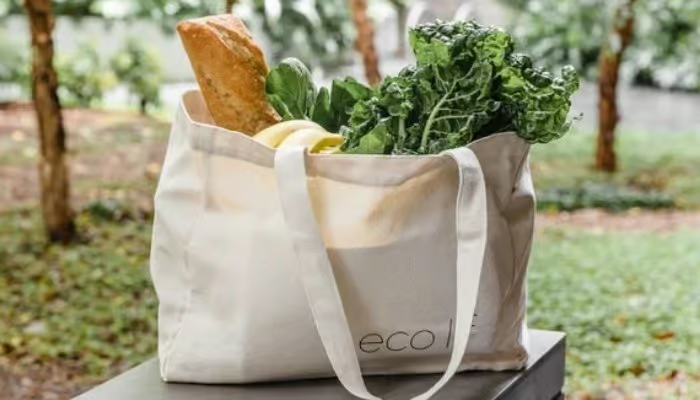
Cotton is one of the most widely used natural materials in reusable shopping bags. It has a soft hand feel, a clean surface, and a familiar everyday look that works well across many retail and promotional settings. Cotton grocery bags are easy to fold, comfortable to carry, and suitable for brands that want a simple and natural presentation.
From a customization angle, cotton usually performs well in printing, especially when you need clear logos or straightforward graphic designs. It can support reusable shopping bag projects that focus on lightweight daily use rather than very heavy loads. Cotton is often a practical choice when you want a balance between natural material appeal, functional usability, and broad market acceptance.
However, standard cotton does not usually provide the same structural integrity or load-bearing capacity as heavier materials. If the fabric weight is too light, the bag may lose shape more easily, wear faster under repeated grocery use, and show wrinkles or moisture marks more quickly in daily handling.
Canvas

Canvas is a heavier and stronger cotton-based material, so it offers a more durable option than standard cotton in reusable shopping bags. It has a thicker structure, better load-bearing performance, and a more substantial feel in hand. Canvas shopping bags often work well for grocery carrying, bookstore totes, branded merchandise, and higher-value promotional projects. The thicker fabric also helps the bag hold its shape better, which improves both appearance and everyday function.
Even so, the added strength usually comes with higher material cost, more shipping weight, and more storage volume in bulk orders. Because canvas also folds less compactly than lighter fabrics, it may not be the most efficient option when portability and packing density matter.
Jute

Jute gives reusable shopping bags a more textured and rustic appearance. It is easy to recognize because of its coarse woven surface and stronger natural character. Compared with smoother fabrics like cotton, jute creates a more earthy and eco-conscious visual impression, which makes it popular in packaging and retail programs that want a clear sustainability message.
Jute bags are often chosen for shopping, gifting, and promotional use where structure and visual identity matter more than softness. The material usually holds its form well and creates a more upright look, which can make the bag feel more substantial on display.
At the same time, the rougher surface makes jute less flexible and less comfortable in the hand than softer fabric options. It also does not support fine, highly detailed printing as easily, and the woven texture can show fiber shedding or surface wear more clearly over time.
Hemp

Hemp is valued for its durability, natural strength, and lower-impact material image. Reusable hemp bags offer a firm and practical structure that suits repeated use. The surface is usually less smooth than cotton, but it gives the bag a more organic and durable character.
Hemp can be a strong material choice when you want reusable shopping bags that communicate longevity and environmental awareness at the same time. It supports a more natural brand tone and can help position the bag as a durable alternative to lighter fabric options. Still, hemp often feels stiffer and less soft than cotton, especially when the fabric is not blended or specially processed. It can also come with a higher price level and a narrower sourcing range, which may affect cost planning and production flexibility in larger orders.
Bamboo

Bamboo-based fabric brings a softer and more refined feel to reusable shopping bags. It is often associated with comfort, renewable sourcing, and a cleaner natural image. Compared with rougher natural fibers, bamboo materials usually feel smoother and look more understated, which can support a more modern or premium presentation.
At the same time, bamboo is less common in the reusable shopping bag market, so fabric weights, constructions, and bulk sourcing options are often more limited. Its structure also depends heavily on the specific fabric development. In grocery-use scenarios that require stronger shape retention or heavier load support, bamboo may not perform as well as sturdier bag materials.
6 Synthetic Fabrics Used for Wholesale Reusable Grocery Bags
Synthetic materials play a major role in reusable grocery bag production because they offer wider flexibility in cost, structure, durability, and surface performance. In wholesale projects, they often make it easier to control unit price, support bulk production, and match different printing or functional requirements.
Non-Woven PP

Non-woven PP is made from polypropylene fibers that are pressed and bonded into a sheet-like material. It does not use a traditional woven structure, so the surface looks more even and the body feels lighter. The material usually has a dry touch, a slightly firm feel, and a clean, simple appearance that works well in reusable grocery bag production.
In bag making, non-woven PP is easy to cut, stitch, ultrasonic seal, and print. It can support different bag sizes, gusset structures, handle styles, and color options, which gives it strong flexibility in custom development. The material also folds easily and helps reduce packing volume in bulk orders.
Its sheet-like structure does not provide the same tensile strength or long-term load support as woven materials. When the bag needs to carry heavier groceries frequently, lower-weight non-woven PP can crease more easily, lose shape faster, and show wear sooner around seams or edges.
PP Woven
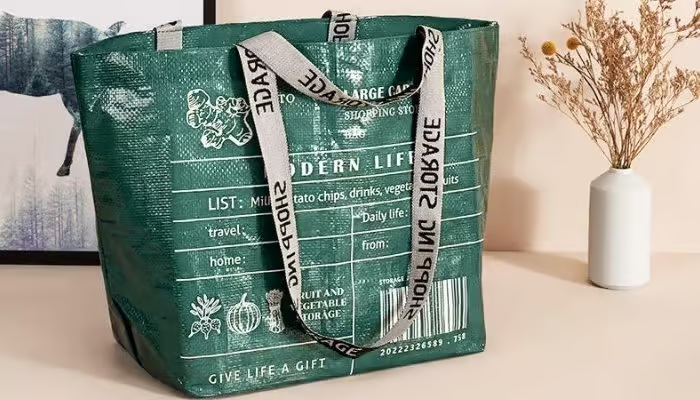
PP woven is made by weaving polypropylene tapes into a structured fabric. Because of this construction, the material has a visible grid-like texture and a firmer body. It feels stronger in hand, holds its shape more clearly, and gives reusable grocery bags a more utility-focused appearance.
In bag production, PP woven supports larger bag formats, boxy structures, and reinforced handle designs more effectively. The material handles regular grocery carrying well and performs more steadily when the bag needs to support heavier contents. It also works well with lamination when you want a smoother printed surface or a more polished outer look.
Its overall feel is more rigid than soft, so the bag usually looks more functional than refined. The woven texture can also affect surface smoothness if the bag is left unlaminated. In bulk packing, the stronger body adds stability, but it also reduces how compactly the bag folds.
Polyester

Polyester is a synthetic fabric made from filament yarns, and its surface usually looks smoother and more refined than utility-style sheet materials. It has a clean appearance, a lighter fabric feel, and a more flexible body, which makes it suitable for reusable grocery bags that need a neater finish and easier everyday handling.
In custom bag development, polyester supports stitched construction, foldable formats, zipper additions, and a wide range of fabric thicknesses. It also holds color well and gives printed bags a more stable, consistent look. Depending on the fabric density, polyester can be developed into lightweight shopping bags or more durable reusable grocery bags with a stronger body.
Its structure depends heavily on fabric weight and weave density. Lighter polyester bags feel softer and pack down more easily, but they may not provide enough firmness for grocery bags that need to hold shape during heavier use. If the fabric is too thin, the bag can also look less substantial in the hand.
Nylon

Nylon is a lightweight synthetic fabric with a smooth surface and a softer, more flexible body. It often feels thinner and more compact than structured grocery bag materials, which makes it useful in reusable grocery bag designs that need to fold down easily and take up less storage space.
Because nylon is often used in thinner constructions, the bag body may feel less firm and show less structure when empty. The nylon bag surface also tends to reflect a more synthetic visual style, so the final look depends a lot on fabric finish, thickness, and bag design details.
Tyvek

Tyvek offers a very different material expression in reusable grocery bags. It has a paper-like appearance but performs more like a lightweight synthetic sheet, which gives the bag a distinctive texture and a more contemporary visual identity. This makes Tyvek attractive in projects that want a cleaner, design-forward surface without using traditional fabric materials.
However, Tyvek does not feel like a traditional woven fabric, so the hand feel can be less familiar in everyday grocery use. Its structure also depends heavily on bag design and reinforcement details. Without the right construction, it may not offer the same carrying confidence as stronger woven bag materials used for heavier grocery loads.
RPET

RPET is made from recycled polyethylene terephthalate, usually sourced from recycled plastic bottles and then processed into bag fabric. The final material can appear in different constructions, but it often has a smooth synthetic surface, stable color performance, and a relatively clean, uniform look in reusable grocery bag production.
For brands that want reusable grocery bags to reflect environmental messaging more clearly, RPET adds value at the material level rather than only through bag reuse itself. It also supports color development, printing, and scalable production in a way that fits many wholesale programs.
Even so, RPET performance still depends on the specific fabric structure. A lighter RPET non-woven bag will not perform the same way as a stronger woven recycled fabric. Cost can also run higher than standard PP options, especially when certification, traceability, or higher recycled-content requirements are part of the project.
Comparing Materials for Reusable Grocery Bags: Natural vs. Synthetic

Before you compare specific fabrics, it helps to look at the bigger material groups first. Natural and synthetic materials shape reusable grocery bags in very different ways. They influence how the bag looks, how it feels in hand, how it performs in daily use, how easily it prints, and how well it fits your cost target. A category-level comparison makes it easier to narrow your direction before moving into individual material choices.
| Comparison Factor | Natural Materials | Synthetic Materials |
| Appearance & Texture | Softer hand feel, more natural texture, stronger organic visual appeal | Cleaner surface, more uniform finish, stronger technical or modern look |
| Durability & Load Capacity | Performance varies by fiber and fabric weight; better suited to medium to heavy use in stronger constructions | More stable structural performance in bulk bag development; easier to engineer for heavier loads |
| Washability | Can be washable, but often absorb more moisture and dry more slowly | Easier to clean, less absorbent, and more practical for frequent daily handling |
| Cost & Long-Term Value | Often higher material cost, with value tied to texture, brand feel, and repeated reuse | Usually more flexible in cost control, especially for large-volume orders and practical long-term use |
| Printing Compatibility | Printing quality depends more on surface smoothness and fiber texture | More consistent surface performance for logos, solid colors, and large-scale print programs |
| Best-Fit Business Use | Premium retail, eco-focused branding, gift packaging, lifestyle-oriented reusable bags | Supermarkets, promotions, utility shopping bags, foldable retail bags, bulk distribution |
| Sustainability Profile | Strong natural-material image; impact still depends on sourcing, processing, and the reuse cycle | Sustainability value often comes from durability, recycled content, and reuse efficiency |
| Foldability & Storage | Softer fabrics fold well, but thicker natural fabrics take up more space | Usually easier to optimize for compact folding and bulk storage efficiency |
How to Choose the Right Material for Custom Reusable Grocery Bags?
Choosing the right material for custom reusable grocery bags is not only about picking a fabric that looks good. You need to connect material selection with your selling channel, branding needs, cost target, printing method, and expected reuse frequency.
A material that works well for a premium retail program may not suit a supermarket rollout, while a low-cost promotional bag may not deliver the durability your customers expect. The more clearly you define the bag’s commercial goal, the easier it becomes to narrow down the right material direction.

Define Your Market, Budget, and Reuse Goals
The right fabric for custom reusable grocery bags should match the bag’s market position, target price level, and expected reuse cycle. Material selection works best when it is tied to the actual role of the bag in retail, promotion, or branded distribution.
- Supermarket and mass retail: Non-woven PP and woven PP are common choices for large-volume grocery bag programs. Non-woven PP fits controlled budgets and everyday retail use. Woven PP fits structured bags, repeated carrying, and heavier grocery loads.
- Promotional and high-volume distribution: Non-woven PP, polyester, and lighter RPET are widely used in projects that focus on cost control and broad distribution. These materials support simple bag formats, branded giveaways, and regular light-to-medium reuse.
- Eco-positioned retail: Cotton, jute, hemp, and RPET fit projects that want natural texture, recycled content, or an eco-focused material story. These fabrics are often used when the bag needs to carry both functional value and environmental messaging.
- Premium and long-term reuse programs: Canvas, stronger cotton, woven PP, Tyvek, and selected RPET fabrics are used in projects that require a more defined bag shape, a stronger material feel, and repeated long-term use.
Match Material to Printing and Bag Performance
Material selection should be reviewed together with printing needs, carrying demands, and bag structure. A reusable grocery bag does not perform well when the fabric is chosen only by appearance or only by material category.
- Cotton and canvas: Ideal for screen printing and heat transfer. Cotton offers a soft, lightweight body for everyday logos, while canvas provides a firmer structure and premium carrying feel for heavy-duty use.
- Non-woven PP and polyester: Best for clear, direct spot-color branding. Non-woven PP is the go-to for lightweight retail bags; polyester excels in foldable formats, making bags easier to store and carry.
- Woven PP and firmer RPET fabrics: Laminated surfaces support full-graphic gravure printing, while unlaminated suits simple logos. These materials offer maximum body and support for gusseted or box-shaped bags.
- Jute, hemp, straw, and other textured materials: Textured surfaces favor bold logos and sewn labels over fine details. The material’s natural character defines the bag’s identity, prioritizing style and texture alongside carrying function.
Balance Sustainability Claims With Commercial Practicality
Sustainability should be viewed as a comprehensive project strategy rather than a standalone label. For custom reusable grocery bags, a material’s name does not automatically define the environmental value of the finished product. While a natural or recycled material “story” adds appeal, it must be backed by commercial viability to be truly effective.
Natural materials such as cotton, canvas, jute, hemp, and bamboo support a more obvious eco-conscious image, but they do not behave in the same way. Canvas and hemp usually support longer reuse, while jute adds a stronger natural texture and visual impact. At the same time, heavier natural fabrics can raise material cost and freight cost, and rougher surfaces may reduce print precision or carrying comfort.
Synthetic options such as RPET, PP woven, nylon, and polyester often make it easier to balance sustainability goals with scale and efficiency. RPET works well when recycled-content messaging matters, while PP woven and durable polyester support longer service life in everyday grocery use. Nylon and lightweight polyester also help reduce storage space and shipping volume, which matters when commercial practicality is part of the sustainability decision.
Review Samples and Proofs Before Bulk Production
Material names and swatches can help with shortlisting, but they are not enough for final approval. Physical samples and print proofs allow you to confirm how the reusable shopping bag actually feels, performs, and presents the brand. This step reduces risk before larger production costs are committed.
- Design & Layout: Visual Accuracy. Verify logo placement on all panels and gussets; ensure graphics are scaled correctly to remain visible and legible when the reusable grocery bag is fully loaded and expanded.
- Material & Color: Tactile Quality. Confirm the fabric weight (GSM) and texture match your durability needs; check Pantone accuracy against the physical material to ensure the brand identity remains consistent across the entire production run.
- Construction & Stitching: Structural Integrity. Inspect handle reinforcements and seam strength; ensure the stitching is secure enough to prevent failure during heavy-duty use, a critical factor for a reliable reusable shopping bag.
- Performance Testing: Load and Durability. Conduct real-world weight tests to check bag shape and bottom stability; verify that the printing adheres firmly to the material and won’t crack or peel after repeated grocery trips.
New Directions in Reusable Grocery Bag Development
Reusable grocery bag development is moving beyond basic material substitution. More brands now focus on how the bag is made, how long it stays in use, and what happens after disposal. This shift is pushing material innovation toward simpler structures, lower-impact alternatives, and functional upgrades that improve hygiene and maintenance in daily use.

Mono-Material Design
Mono-material design means building the reusable grocery bag from one main material family instead of combining multiple incompatible layers, coatings, or components. In bag development, this usually affects the body fabric, handles, stitching strategy, and added surface treatments. The goal is to make the bag easier to recycle by reducing mixed-material complexity at the end of its life cycle.
Many conventional bags combine different materials for strength, printing, and appearance, which can make recycling more difficult. A mono-material PP bag, PE-based bag, or polyester-based bag creates a cleaner material structure and a more streamlined recovery path. At the same time, this approach requires better engineering, because the bag still needs to meet printing, strength, and daily-use requirements without relying on too many mixed-material add-ons.
Biodegradable and Plant-Based Bioplastics
Innovative bags are increasingly utilizing polymers derived from renewable feedstocks like corn starch, sugarcane, and PBAT to reduce reliance on fossil fuels. These biodegradable reusable grocery bags offer a performance similar to traditional synthetics but are designed to break down in industrial composting environments. By shifting away from conventional plastics that fragment into microplastics, these plant-based solutions provide a cleaner ecological footprint for retail programs focused on zero-waste objectives.
Anti-Microbial and Self-Cleaning Fabric Coatings
Since reusable grocery bags often carry raw produce and frozen goods, hygiene has become a primary development focus. New bags are being integrated with anti-microbial treatments, such as silver ion technology, to inhibit the growth of bacteria and mold between uses. Furthermore, advanced self-cleaning coatings that repel liquids and stains are being applied to extend the bag’s service life, keeping the fabric clean and the branding vibrant over hundreds of shopping trips with minimal maintenance.
Partner with Gentle Bags for Your Reusable Grocery Bags
Choosing the right reusable grocery bag supplier is not only about finding a factory that can produce bags. You also need a partner who can help you match the right material to your market, branding, budget, and performance goals. At Gentle Bags, we support custom reusable grocery bag projects with a more practical development approach, from material selection and structure planning to printing, sampling, and bulk production.
Whether you need cost-effective supermarket bags, foldable promotional bags, or more premium reusable grocery bags, our team can support sampling and bulk production with a more efficient and commercially practical approach. Contact us to discuss your custom reusable grocery bag project and get a solution that fits your business more clearly.
Conclusion
Choosing the right material for reusable grocery bags affects much more than appearance alone. It influences bag strength, print results, reuse value, storage efficiency, sustainability positioning, and overall project cost. Natural and synthetic materials each bring different advantages, so the better choice depends on how the bag will be used, what your market expects, and how you want the final product to support your brand.
For wholesale buyers and brand owners, the most effective approach is to match material choice with actual business needs instead of following one fixed idea of what a reusable bag should be. Once market goals, budget, printing requirements, and reuse expectations are clear, it becomes much easier to identify the material that can deliver the right balance of performance, presentation, and long-term value.
FAQs
1. Is cotton better than polypropylene for reusable shopping bags?
It depends on your goal. Cotton is biodegradable and offers a premium, natural feel, but has a higher environmental impact during production. Polypropylene is more affordable, water-resistant, and has a lower carbon footprint per bag manufactured. Cotton is better for brand image, while PP is better for large-scale utility.
2. Can reusable shopping bags be recycled?
Some can, but it depends on the material and local recycling systems. Single-material plastic bags are usually easier to recycle, while mixed-material bags are more difficult.
3. Are non-woven reusable grocery bags recyclable?
Yes, most non-woven reusable grocery bags are recyclable because they are made from polypropylene. However, actual recycling still depends on local collection and sorting capability.
4. What is the most durable material for reusable grocery bags?
Woven Polypropylene and Heavy-weight Canvas are the top choices. Woven PP is nearly impossible to tear and handles heavy, sharp-edged items easily. Canvas offers extreme long-term durability and can be washed and reused for years without losing structural integrity.