
Choosing the right cosmetic bag size takes more than selecting a small, medium, or large label. A bag can appear large enough on paper but still lose usable space once seams, gussets, dividers, padding, and product shapes come into play. For custom orders, the wrong dimensions can also increase material use, reduce packing efficiency, and affect the final appearance.
This guide explains common cosmetic bag sizes, usable capacity, functional features, size selection for different uses, and the factors that shape custom dimensions. It also covers sample validation and common sizing mistakes before bulk production.
What Are the Common Cosmetic Bag Sizes?
For custom cosmetic bag orders, small, medium, and large categories provide a practical starting point for comparing different size options. These general size ranges help brands estimate how much space a bag should provide for the intended product group before moving into detailed sampling. The final size should still reflect the actual contents, required capacity, packing style, and overall presentation of the finished bag.
Small Cosmetic Bag
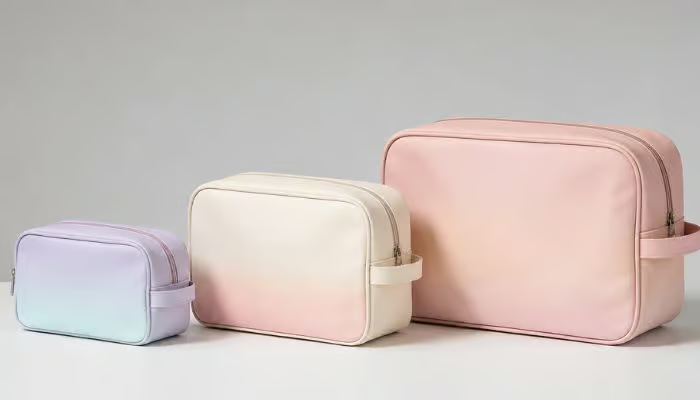
A small cosmetic bag typically measures about 5–8 inches (13–20 cm) in length, 3–5 inches (8–13 cm) in height, and 1–3 inches (2.5–7.5 cm) in depth. Its compact proportions suit slim and lightweight beauty items such as lipstick, mascara, eyeliner, brow pencils, and small tubes, while leaving limited room for tall bottles or bulky containers.
Medium Cosmetic Bag
Medium cosmetic bags generally fall around 9–12 inches (23–30 cm) long, 5–7 inches (13–18 cm) high, and 2–4 inches (5–10 cm) deep. The additional length and depth make this size better suited to mixed product sets that include foundation bottles, pressed powder, compact cases, short brushes, and several skincare items without creating an oversized bag.
Large Cosmetic Bag
Large cosmetic bags commonly measure about 13–14 inches (33–36 cm) in length, 7–10 inches (18–25 cm) in height, and 3–6 inches (7.5–15 cm) in depth. The larger footprint accommodates fuller beauty collections with tall skincare bottles, wide palettes, makeup brushes, jars, and other high-volume products that need more vertical and horizontal space.
Common Cosmetic Bag Size Chart
Cosmetic bag sizes vary according to the amount and type of products they need to hold. Small, medium, and large size ranges provide a useful reference for comparing capacity before a custom size is finalized for production.
| Size | Typical Dimensions (L × H × D) | Approx. Capacity | Typical Contents |
| Small | 5–8 × 3–5 × 1–3 in (13–20 × 8–13 × 2.5–7.5 cm) | 0.5–2 L | Lipstick, mascara, eyeliner, brow pencils, small tubes |
| Medium | 9–12 × 5–7 × 2–4 in (23–30 × 13–18 × 5–10 cm) | 2–5 L | Foundation, pressed powder, blush compacts, concealer, short brushes |
| Large | 13–14 × 7–10 × 3–6 in (33–36 × 18–25 × 7.5–15 cm) | 5–10 L | Full-size skincare bottles, large palettes, long brushes, jars |
Makeup Bag External Dimensions vs. Internal Space
External dimensions and internal space describe two different things. External dimensions show the finished overall size of the makeup bag, while internal space shows how much room is actually available for the products inside. A bag can meet its specified outside size without providing the same amount of usable room internally.
The difference comes from the construction layers between the outer shell and the interior cavity. Seams, lining, edge binding, zipper placement, and material thickness all reduce the usable room inside a cosmetic bag. For instance, a bag with an external height of 18 cm will usually provide less than 18 cm of clear vertical space inside. Brands need to account for this difference when the bag must hold bottles, jars, or other products with fixed dimensions.
How Does Cosmetic Bag Structure Affect Usable Capacity?
Cosmetic bag structure changes usable capacity by controlling where the body can expand and how evenly that space is distributed. Two bags can share similar outside dimensions but hold different amounts because flat panels, gussets, side walls, and curved tops create volume in different ways. The key issue is how much of that volume remains practical once products are packed inside.
Flat Cosmetic Pouches
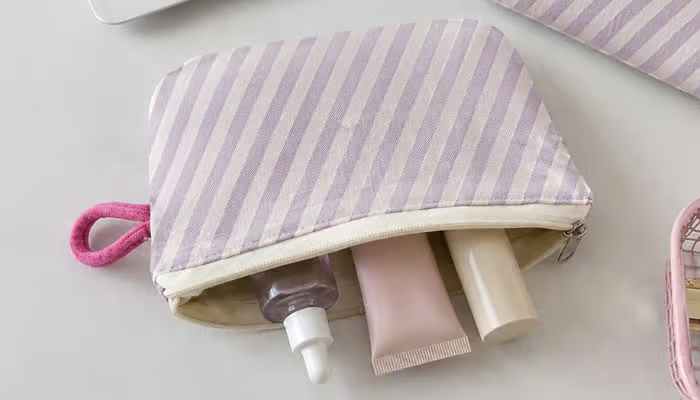
Flat cosmetic pouches have little or no side depth, so most of their usable space comes from length and height. It works best for slim products, while thicker items quickly use up the available space and make the pouch bulge outward. As the contents become bulkier, the usable capacity drops more quickly than in a gusseted or box-shaped bag.
For example, a 20 × 14 cm flat pouch can accommodate several slim cosmetics across its face area. Add a 5 cm-thick jar, however, and the pouch must wrap around that thickness, leaving less flat area for other products. Flat makeup pouches provide good usable space for thin items but lose packing efficiency as product thickness increases.
Gusseted Cosmetic Bags
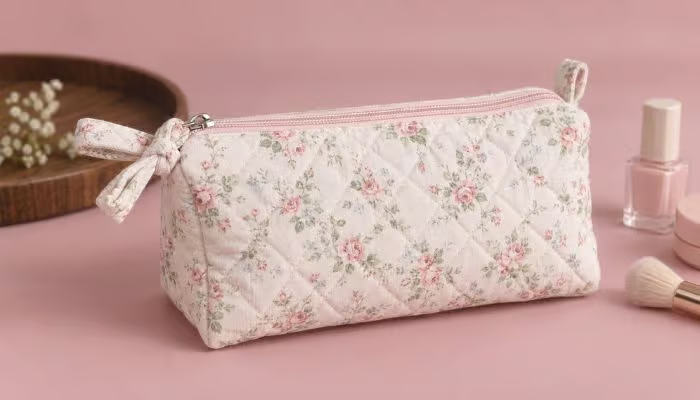
Adding a bottom or side gusset creates dedicated depth instead of forcing the front and back panels to stretch around thicker products. That extra base or side width converts a mostly two-dimensional makeup pouch into a more usable three-dimensional space, so bottles, jars, and round containers occupy less of the bag’s length and height.
Consider two cosmetic bags with the same 20 × 15 cm front dimensions. If one remains flat and the other includes an 8 cm bottom gusset, the gusseted version can spread its contents across a wider base rather than stacking them against the front and back panels. Most of the added capacity comes from the extra depth rather than a larger visible face.
Box-Shaped Cosmetic Bags

Defined side panels and a separate base give box-shaped cosmetic bags a more consistent depth across most of the body. This regular shape turns a larger share of the bag’s footprint into usable volume, allowing products to sit beside one another without forcing the walls outward. Capacity becomes easier to predict for bulky or rectangular items.
Take a 25 × 18 × 10 cm box-shaped design. Much of the 10 cm depth remains available across the base instead of concentrating around one central bulge. Bottles, jars, and palettes can occupy the interior more efficiently, although seams and shaped corners still make the usable space slightly smaller than the full rectangular volume.
Curved-Top Cosmetic Bags

Curved-top designs place the greatest vertical capacity near the center and gradually lose height toward both upper corners. The makeup bag can therefore accept taller products in the middle, but it cannot use its maximum stated height across the full width. Capacity is distributed less evenly than in a straight-sided box shape.
If the center reaches 18 cm high, the side areas may offer only about 13–15 cm of practical vertical clearance, depending on the curve. Tall bottles or brushes naturally occupy the central zone, while shorter items fit more easily near the edges. The curved profile adds useful central height but gives up some upper-corner volume.
Functional Features That Influence Cosmetic Bag Size
Functional details can reduce usable space or change the dimensions a cosmetic bag needs, even when the product quantity stays the same. Compartments, brush storage, padding, and opening design all add structure, so they should be planned before the final size is fixed.

Compartments and Dividers
Compartments and dividers help separate cosmetics, but they also limit how freely the interior space can be shared. A bag may have enough total capacity overall, yet fixed sections can make certain areas feel crowded if the products do not match the compartment proportions. Narrow sections can restrict wider items, while unused space in one compartment cannot always compensate for a tight fit in another.
The internal layout therefore affects the makeup bag dimensions as well as the organization. Side-by-side compartments usually require more width, while stacked or layered sections place greater demand on depth. When several fixed dividers are added, the overall cosmetic bag size often needs to account for both the products and the space occupied by the compartment structure itself.
Brush Holders and Elastic Loops
Brush holders and elastic loops create dedicated storage positions for tools that need to stay separated from the main product area. Long brushes need enough uninterrupted length or height, while larger brush heads can also require extra clearance so they do not press against nearby products or the bag wall. Multiple loops can take up a substantial section of an inner panel, lid, or flap.
That dedicated storage zone can influence the proportions of the finished makeup bag. Longer tools may set the minimum panel length or height, while several loops arranged side by side can increase the panel width required. If the holders sit above the main compartment, the design also needs enough closing clearance to prevent the brushes from pressing into the contents below.
Padding and Structured Panels
Padding and structured panels protect the contents and help the cosmetic bag hold a more defined shape, but they use part of the space inside the finished dimensions. Foam, reinforcement, and rigid layers add thickness around the walls, base, or lid without increasing the usable storage area. A highly structured bag also flexes less around bottles, jars, and other irregular product shapes.
If the design needs to preserve the same internal capacity, the outside dimensions may need to increase. Padding applied to several sides can add to the required length, height, or depth, while rigid panels make precise size planning more important because the bag cannot easily expand around the contents. The effect becomes stronger as the protective layers become thicker.
Opening Size and Access Clearance
A cosmetic bag can have enough internal volume but still be difficult to use if the opening is too narrow. Bottles, palettes, jars, and boxed cosmetics need enough clear space to enter and leave the bag without excessive tilting, squeezing, or catching on the zipper. The largest rigid item often determines whether the opening works in practice.
Improving access can change the upper structure of the makeup bag. Wide-opening, U-shaped, or clamshell designs may require longer zippers, larger top panels, or a wider opening angle, which can affect the final length, width, or top profile. For this reason, the opening should be sized around the largest item that needs to pass through it, not just the total capacity inside the bag.
What Makeup Bag Size Is Best for Different Uses?
The best makeup bag size depends on how the bag will be presented, carried, organized, and used. Different applications place different priorities on capacity, portability, presentation, access, and internal organization, so the same dimensions will not suit every project. The final size should reflect both the amount of storage required and the way the interior needs to function.
Beauty Gift Sets
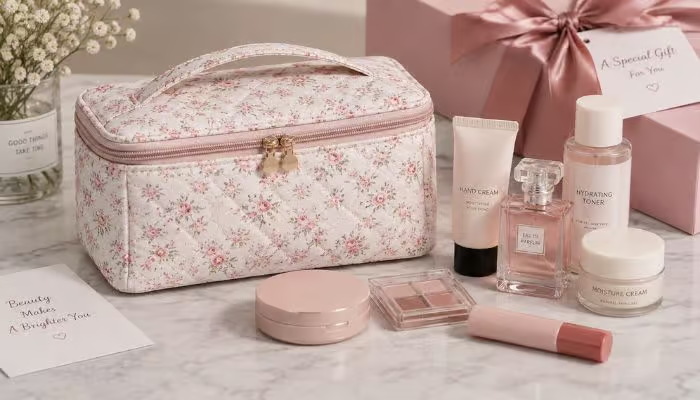
Beauty gift sets commonly fit within 8–11 in L × 5–7 in H × 2.5–4 in D (20–28 × 13–18 × 6–10 cm). This range gives several products enough room to sit together without making the finished set look oversized. Presentation matters here because the bag often becomes part of the gift rather than serving only as secondary packaging.
Light internal organization, such as elastic retainers, shallow dividers, or a fitted insert, can keep the assortment aligned when the set is opened. Clinique regularly groups makeup and skincare into curated sets, showing why the cosmetic bag should support the complete assortment. Box-shaped or semi-structured designs can also help maintain a neater presentation.
Retail Cosmetic Lines
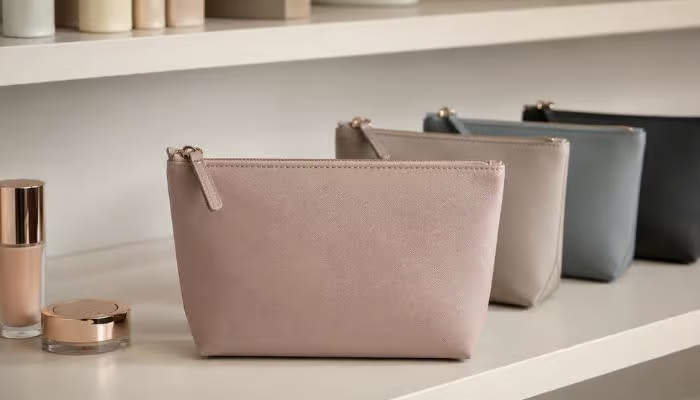
For everyday retail cosmetic lines, 7–10 in L × 4.5–6.5 in H × 1–2.5 in D (18–25 × 11–16 × 2.5–6 cm) is a useful working range. These dimensions keep the makeup bag portable while still giving it enough presence to function as a standalone retail accessory.
Retail interiors usually remain simple, with one main compartment and perhaps a small slip or zip pocket for basic separation. This open layout gives customers more flexibility to arrange different everyday cosmetics, while a flat or lightly gusseted body keeps the bag compact without limiting that usable interior space.
Promotional Giveaways
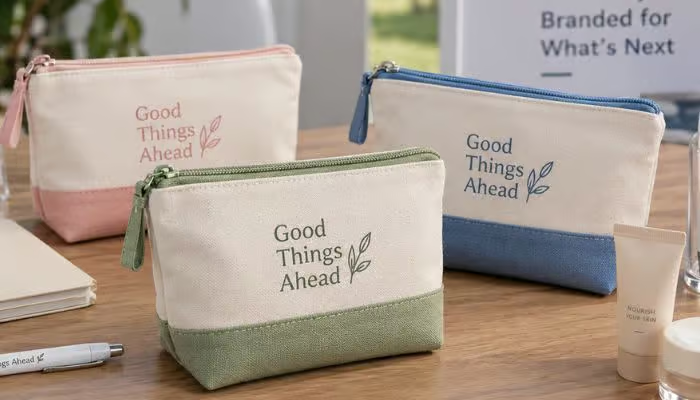
Promotional makeup bags usually stay around 6–9 in L × 4–6 in H × 1.5–3 in D (15–23 × 10–15 × 4–7.5 cm). Compact dimensions help control fabric use, carton volume, and distribution cost when the same design is produced in large quantities. At the same time, the front panel still needs enough clear area for a logo, campaign graphic, or seasonal artwork.
The interior normally remains simple because the bag needs to work with changing promotional assortments rather than one highly specific product layout. Estée Lauder’s gift-with-purchase offer includes a makeup case together with several beauty products, illustrating how the bag functions as part of a broader promotional set.
Travel and Hotel Amenity Kits
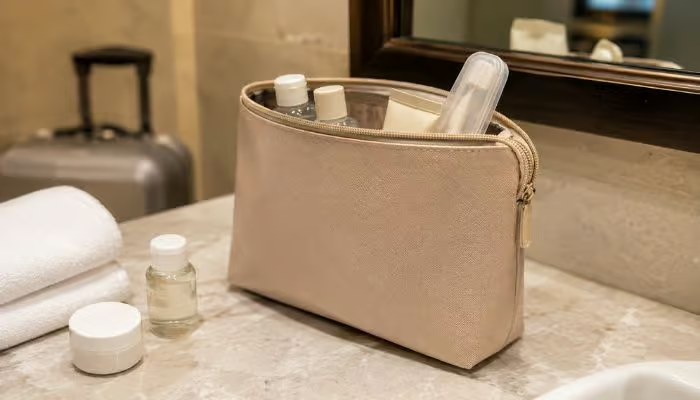
Most travel and hotel amenity kits work within 7–10 in L × 5–7 in H × 2.5–4 in D (18–25 × 13–18 × 6–10 cm). Travel cosmetic bags place more emphasis on practical access and separation than a basic retail pouch does. The bag needs enough room for toiletries and beauty products without taking up unnecessary luggage space.
Internal zip pockets, transparent sections, wipeable lining, and divided storage areas can make travel items easier to organize and reach. TUMI’s toiletry and makeup bags use features such as transparent pockets, detachable pouches, and hanging hardware. These interiors work well with gusseted, hanging, or wide-opening formats, depending on whether the bag needs to pack flat, stand on a counter, or open fully.
Professional Makeup Storage
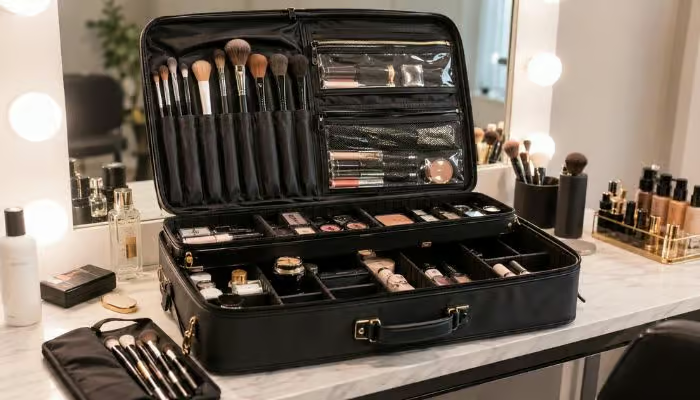
Professional makeup storage typically requires about 11–15 in L × 7–11 in H × 4–7 in D (28–38 × 18–28 × 10–18 cm). The larger size supports more than extra capacity. Professional use also requires fast access, clear product separation, and enough room to keep tools and cosmetics organized while the case stays open during work.
Adjustable dividers, brush sections, mesh pockets, and compartments help organize the interior into practical working zones. Caboodles Metro Moxie™ features adjustable dividers, a zippered mesh pouch, and dedicated holders for makeup brushes and pencils. For a larger professional makeup bag size, wide-opening, box-shaped, or semi-structured organizer bags provide clearer visibility and easier access.
How to Determine the Right Custom Cosmetic Bag Size?
The right custom cosmetic bag size depends on more than the product dimensions alone. The packed footprint, fitting clearance, material, branding area, and cost all influence the final length, height, and depth. Reviewing these factors together helps define dimensions that match both the contents and the commercial requirements of the finished bag.
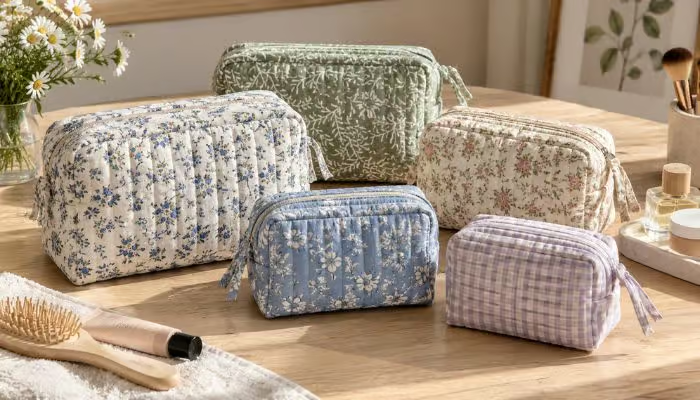
Measure the Products
Gather all products that will go into the cosmetic bag and place them together in a compact group. Measure the overall length, width, and height of the complete set from its outermost points, following the same basic approach used in the GS1 package and product measurement standard. Include bottle caps, pump heads, boxes, sleeves, or any packaging that will remain with the products, since these parts contribute to the occupied space.
These measurements establish the basic dimensional requirements for the custom cosmetic bag. The size reference should come from the complete product group rather than the largest individual item alone. This provides a realistic starting point for defining the length, height, and depth the bag will need.
Plan the Internal Packing Layout
Next, arrange the complete product set in the position it will take inside the cosmetic bag. The layout determines how the occupied space is distributed across the bag dimensions. Placing more items side by side increases the required length, arranging them in multiple rows adds depth, and stacking them increases height.
A practical layout can change the proportions required for the finished makeup bag without changing the product set itself. Distributing products across length, height, and depth more effectively can avoid an unnecessarily long, tall, or bulky design. The chosen arrangement should reflect the proportions intended for the finished bag.
Allow Extra Space for Fit
Add clearance to the occupied product dimensions rather than using the packed size as the exact makeup bag size. For many cosmetic bag projects, around 1–2 cm (0.4–0.8 in) of fitting clearance can provide a practical starting point, although the final allowance should reflect product rigidity and the selected bag construction.
Its placement depends on the product arrangement. Taller products may need clearance above them, wider groups may require additional room at the sides, and thicker layouts may need more depth. This keeps the bag comfortably fitted without adding excessive space.
Consider Bag Material

Bag material can change the dimensions required for the same product set. Soft fabrics can flex around the contents, while thicker or more structured materials take up more space and adapt less easily to tightly packed products. Material behavior should form part of the size decision before the final cosmetic bag dimensions are fixed.
- Polyester: Its relatively soft construction allows the bag body to flex around the contents, keeping the required dimensions closer to the packed product size.
- Nylon: A pliable surface adapts well to irregular shapes and can reduce the additional width or depth needed compared with stiffer fabrics.
- Canvas: Thicker, firmer canvas occupies more space along the bag walls and bends less easily. The finished canvas cosmetic bags‘ dimensions often need to increase slightly to maintain the intended fit.
- TPU: TPU makeup bag maintains a more defined shape and provides less flexibility than soft woven fabrics, making precise length, height, and depth planning more important.
- PU: PU can fold less tightly around corners than soft woven fabrics, so compact bag designs may need a little more room at folds, seams, and curved edges.
- Laminated or foam-backed fabrics: Additional layers increase wall thickness and structure, requiring larger external dimensions when the same internal product space needs to be maintained.
Reserve Logo Display Area
Logo placement can influence the minimum front-panel dimensions of a custom cosmetic bag. A larger printed logo, embroidered mark, rubber patch, or metal plate needs enough uninterrupted surface area to remain clear and properly proportioned. A panel that is too narrow or short can push the branding too close to seams, zipper curves, folds, or edge binding.
Reserve the branding area while defining the bag dimensions rather than fitting the logo into whatever space remains afterward. A wide horizontal logo can increase the required bag length, while taller artwork can affect the minimum panel height. This keeps the intended logo scale compatible with the overall personalized cosmetic bag size.
Balance Size and Cost
Balancing cosmetic bag size and cost means keeping every dimension tied to a real functional or branding requirement. For custom cosmetic bags, unnecessary length, height, or depth can increase fabric consumption and require more lining, zipper, binding, foam, and other components. Removing unnecessary volume helps control production costs without reducing the space the finished bag actually needs.
Shipping cost adds another sizing consideration. A bulkier or less foldable cosmetic bag can reduce the number of units packed into each carton, increasing the freight cost allocated to each piece. For air freight and express delivery, larger cartons can also increase dimensional weight, which can raise the chargeable shipping weight even when the actual weight changes very little.
How to Validate Cosmetic Bag Size Before Bulk Production?
Before bulk production, validate the cosmetic bag size with the approved sample and the actual product set. Check four things separately: product fit, opening access, filled shape, and finished dimensions. Each check confirms a different part of the sizing decision before the order moves into production.
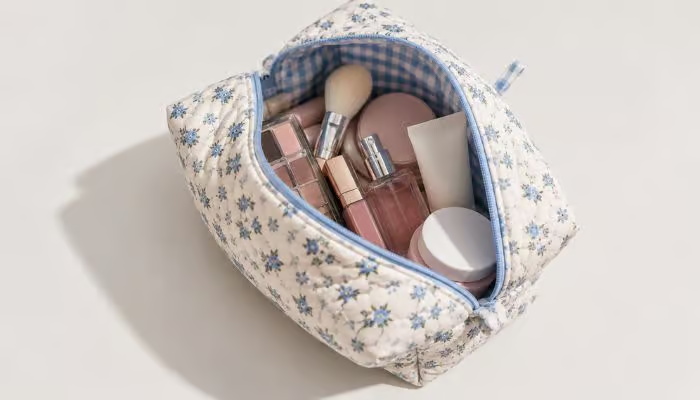
Test Product Fit
Pack the complete product set into the sample using the intended arrangement and fill the cosmetic bag to its normal working condition. Check whether every item sits within the bag body without forcing the side panels outward, pushing against the top closure, or creating excessive space around the group. Repeat the test with the full set rather than testing individual products separately.
Then lift, carry, and set down the loaded bag to see whether the contents remain in their intended positions. A suitable cosmetic bag size should keep the complete product group comfortably contained without excessive compression or uncontrolled movement. If the products immediately distort the bag body or shift into large unused areas, the selected dimensions need further review.
Check Opening Access
Use the actual products to test whether the makeup bag opening provides enough clear access. Start with the widest, tallest, or most rigid item and insert it in the same orientation a user would normally use. The product should pass through the opening without excessive tilting, squeezing, or catching on the edge.
Next, repeat the check with the full product set already packed inside the bag. The opening should still provide enough clearance for products to be removed and returned easily without forcing the surrounding panels apart. This confirms that the cosmetic bag size supports practical access as well as internal capacity.
Review the Filled Shape
Set the fully packed cosmetic bag on a flat surface and review its overall appearance from the front, side, and top. Check whether the bag keeps the intended proportions, sits evenly on its base, and presents a balanced shape when filled. A sample can fit all products correctly but still appear too tall, too flat, overly bulky, or visually unbalanced once the contents are arranged inside.
Compare the filled sample with the intended product presentation rather than focusing only on whether everything fits. The front panel, side profile, top line, and overall silhouette should look proportionate to the contents and consistent with the planned design. If the loaded bag looks unnecessarily large or poorly balanced, the dimensions or product layout may need adjustment before bulk production.
Verify Sample Size
Measure the finished cosmetic bag dimensions using the same measurement points defined for production. Record the overall length, height, and depth with the sample placed in the agreed condition, such as laid flat or standing naturally. Measure from consistent seam or edge references so that the result can be repeated during later inspections.
Compare the recorded dimensions with the approved specification and document any deviation before releasing the order. Use the verified sample dimensions as the dimensional reference for bulk production, and record where each measurement starts and ends. This gives production and quality inspection the same basis for checking finished bags.
Common Makeup Bag Sizing Mistakes in Custom Orders
Sizing problems often happen when brands fix dimensions before checking how the complete product set, packing method, and finished bag will work together. The most common mistakes either make the makeup bag too tight, unnecessarily large, or unsuitable for the intended product group, which can affect fit, appearance, cost, and production consistency.
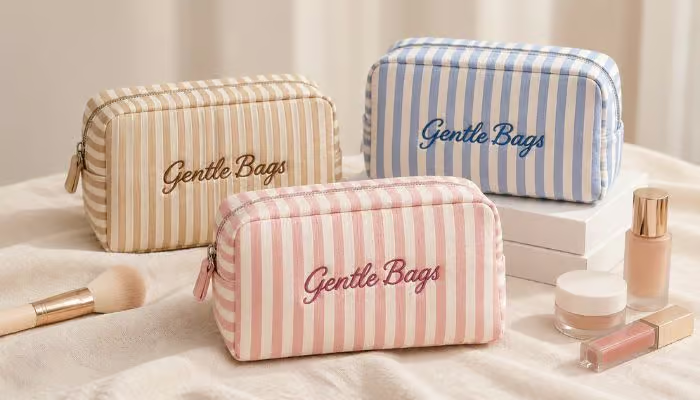
Using External Size Only
Using only the external makeup bag dimensions can lead to an incorrect size decision, especially when the bag must match a fixed product set. A specification may appear suitable on the drawing but still prove too tight or poorly proportioned once the products are packed into the sample. Avoid this mistake by checking the actual internal fit rather than treating the outside measurements as the bag’s usable capacity.
Setting the Size Too Early
Fixing the cosmetic bag size before the product set, packing layout, material, and branding are confirmed can cause repeated revisions. Early dimensions may no longer work as the design develops, leading to extra samples, longer development time, and delayed approval. Keep the dimensions provisional until the product set and main design requirements are confirmed; then finalize the size during sample approval.
Adding Unnecessary Capacity
Making a makeup bag larger “just to be safe” may create more problems than it solves. Excess space allows the contents to move, weakens the intended filled appearance, increases material consumption, and can also add packing and freight costs across a bulk order. Use the actual product footprint and required fitting clearance to justify each dimension rather than adding extra length, height, or depth without a specific functional reason.
Reusing One Size for Different Sets
Applying one cosmetic bag size to several product sets can produce inconsistent results because each assortment occupies space differently. A size that works for a group of slim products may feel oversized for a smaller set or become too shallow for thicker bottles and jars, even when the total item count looks similar. Review the occupied dimensions and packing profile of each product set separately, then keep one common size only when those requirements are genuinely close enough to support it.
Conclusion
Choosing the right cosmetic bag size starts with the products it needs to hold, not with a standard dimension alone. External size, usable internal space, gusset depth, compartments, padding, opening clearance, and material thickness all influence how well the finished bag performs. Standard small, medium, and large ranges can guide early planning, but the final dimensions should come from the actual products and be confirmed through sampling before bulk production.
Gentle Bags can help you develop custom cosmetic bags in the right size for your product set and intended use. We support size planning, materials, structure, branding, sampling, and bulk production. Contact us with your product dimensions, target quantity, and design requirements to discuss the most suitable makeup bag size and request a quotation.
FAQs
1. What is the most common cosmetic bag size?
A medium cosmetic bag is one of the most common options for general use, typically around 8–11 in long, 5–7 in high, and 2–4 in deep. This range offers a practical balance between portability and storage, but the custom cosmetic bag size should still follow the actual product set rather than a generic label.
2. Should handles be included in cosmetic bag dimensions?
Usually, the main makeup bag dimensions refer to the bag body and exclude soft handles or straps unless the specification states otherwise. However, fixed or structured handles can affect packing, carton size, and overall product height, so the drawing should clearly define whether handle height forms part of the reported dimensions.
3. How much can the sewn cosmetic bag dimensions vary?
A practical tolerance for many sewn cosmetic bags can fall around ±5 mm (±0.2 in) for smaller designs and approximately ±10 mm (±0.4 in) for larger or more structured bags. The exact tolerance still depends on material, construction, and the approved sample, so it should be confirmed in the product specification before bulk production.
4. Does fabric stretch change usable makeup bag capacity?
Yes. Stretchable or highly flexible fabrics can expand around the contents and provide slightly more practical makeup bag capacity than rigid materials with the same nominal dimensions. However, relying too heavily on stretch can distort the bag shape, strain seams or zippers, and make the finished size less consistent.
5. Can two cosmetic bags with the same dimensions hold different amounts?
Yes. Two cosmetic bags with identical external dimensions can provide different usable capacities because their shape, gusset depth, material thickness, lining, opening design, and internal features use space differently. Makeup bag dimensions alone do not fully describe capacity, so the finished structure and actual product fit also need to be considered.