The recent change around Whole Foods reusable bags reflects a broader shift in retail packaging strategies. Many businesses once relied on small incentives to encourage customers to bring reusable bags. However, as sustainability expectations rise and operational costs increase, these programs no longer deliver the same impact. Large grocery chains now focus more on long-term behavior change, cost control, and scalable packaging systems rather than short-term rewards.
In this article, you will understand what changed, why it matters, and how it affects your packaging strategy, supplier planning, and reusable bag sourcing decisions in today’s market.
What Changed in Whole Foods’ Reusable Bag Policy?
This policy change shows a clear shift from small checkout rewards to regular customer reuse. The company moved away from using bag credits as the main driver and placed more focus on reusable bags as part of normal grocery shopping.

Reusable Bag Credits Ended
Whole Foods ended its reusable bag credit program, which previously gave shoppers a small reward for bringing their own bags. This change marks the end of a direct financial incentive, not the end of reusable bag use.
For your business, this shows that early incentives can help build awareness, but they may not stay necessary forever. Once customers understand the purpose of reusable bags, the program can move into a more mature stage. The main change is that Whole Foods stopped paying customers for a behavior it now expects to continue as a shopping habit.
Normalizing Reusable Bag Use as a Standard Practice
Instead of encouraging reusable bags mainly through rewards, Whole Foods is positioning them as a standard part of the shopping experience. Customers are now expected to bring their own bags as a default behavior, rather than as an optional action linked to a small incentive.
This change matters because grocery shopping depends on routine. When shoppers see reusable bags as something they should prepare before entering the store, reuse becomes easier to repeat. The key change is that reusable bags moved from a rewarded choice to an expected shopping habit.
Transitioning from Reward-Based to Culture-Led Sustainability
The policy reflects a broader move from reward-based sustainability to culture-led sustainability. A bag credit can introduce a new habit, but long-term reuse depends more on customer expectations, store messaging, and daily shopping routines.
This does not mean early incentives had no value. They helped customers notice reusable bags and understand why reuse matters. However, the next stage depends less on small rewards and more on making reuse feel normal. The main change is simple: Whole Foods moved from paying customers to reuse bags toward making reuse part of everyday shopping culture.
What Does Whole Foods’ Shift to Reusable Shopping Bags Mean for Retailers?
This shift means reusable shopping bags should be treated as part of long-term retail operations. These bags now influence packaging budgets, sourcing plans, product performance standards, store consistency, and customer-facing brand value. For supermarkets, grocery chains, and retail brands, reusable bags are no longer just checkout supplies.

Rising Packaging Cost Pressure
Reusable shopping bags usually cost more per unit than thin single-use bags. If you manage many stores or place large-volume orders, this cost difference can quickly affect your packaging budget. You also need to consider costs beyond production. Freight, warehouse space, carton packing, reorder frequency, and unsold inventory can all change the real cost of a reusable bag program.
A cheaper bag may not always reduce cost. If it breaks easily, feels uncomfortable, or fails to support repeated use, customers may not keep using it. You need to control the full cost of your reusable bag program, not only the first quoted price.
Larger Reusable Bag Orders
As reusable bags become a standard retail item, order planning also changes. You may need larger quantities, more frequent replenishment, and a more stable long-term supply.
This is different from a one-time promotional order. A reusable bag program needs consistent specifications, stable colors, predictable lead times, and reliable quality across batches. To support this, it helps to review top reusable shopping bag options for retail sales and choose materials and structures that can be standardized and scaled over time.
If you manage grocery or supermarket packaging, this also affects inventory planning. Stores need enough bags for daily checkout demand, seasonal peaks, and local customer habits. Reusable bags are moving from campaign-based purchasing to regular inventory planning.
Higher Durability Standards
Customers expect reusable bags to last. If a bag breaks after a few uses, it weakens both the sustainability message and the customer experience.
For grocery and retail use, durability depends on handle strength, seam quality, fabric weight, bottom support, and load capacity. These details matter because shoppers often carry mixed items such as drinks, canned goods, fresh produce, and packaged food.
You should not judge durability only by fabric thickness; the shopping bag also needs proper stitching, balanced structure, and comfortable carrying. A reusable bag must survive real shopping conditions, not just look good in a sample photo.
Greater Need for Bag Standardization
If you manage reusable bags across several stores, you need clearer bag standards when reusable bags become part of daily store operations. A stable base specification helps you control quality across stores. It also reduces communication errors when buyers reorder bags or adjust artwork for new campaigns.
Standardization does not remove design flexibility. Seasonal artwork, regional campaigns, and special editions can still change. The base bag should stay consistent, while the visual design can change around it.
More Branding Value from Reusable Bags
Reusable bags can create repeated brand exposure because customers carry them beyond the store. This gives your brand more visibility than a disposable checkout bag. That added branding value depends on continued use. A bag that feels practical for grocery trips, daily errands, or general carrying is more likely to stay in circulation, which gives your logo more chances to appear in real settings.
Branding value comes from more than logo placement. The bag needs a suitable size, a comfortable structure, and enough strength to support repeated use. When these details work together, the reusable bag becomes a longer-lasting brand touchpoint rather than a short-term packaging item.
How Consumer Behavior Is Evolving After the Whole Foods Reusable Bags Change?
Whole Foods’ policy shift shows that consumer behavior around reusable bags is moving from reward-based action to routine-based action. Shoppers may still care about sustainability, but convenience, memory, and daily habits often decide whether they actually bring and reuse bags.

Shift from Reward-Driven to Habit-Driven Usage
After the policy shift, shoppers are less likely to bring reusable bags just for a small reward. They are more likely to see reusable bags as part of the normal shopping process. This changes how customers prepare for grocery trips. Many shoppers may keep bags in the car, near the door, or inside a daily backpack because they expect to need them at checkout.
This shift means reusable bag programs need to support routine behavior. The focus moves away from reminding customers about rewards and toward making bags easy to remember, carry, and use every time they shop.
Convenience Dominates Purchasing Decisions
Customers may support sustainability, but they still choose convenience first in daily shopping. If a reusable bag is hard to carry, too small, too bulky, or difficult to store, many shoppers will not use it regularly. A good reusable shopping bag should fit common grocery items, carry weight comfortably, and fold or store easily between trips.
Convenience needs to be built into the product design rather than added later. The easier the bag is to carry, store, and reuse, the more likely it is to become part of a consistent shopping routine.
Gap Between Eco Awareness and Actual Behavior
Many shoppers understand the environmental value of reusable bags, but awareness does not always turn into repeated action. Customers may forget their bags, collect more reusable bags than they need, or stop using a bag if it feels inconvenient in real life.
You can reduce this gap by removing small friction points before and after checkout. For example, you can offer bags in practical sizes, place them where customers can easily notice them, and choose designs that are easy to keep for the next trip. A reusable bag should make sustainable behavior easier, not only express an eco-friendly message.
What Types of Reusable Shopping Bags Are Retailers Moving Toward?
Retailers are moving toward reusable shopping bags that balance cost, durability, branding, and sustainability. Common options include non-woven PP, woven PP, RPET, cotton, canvas, jute, polyester, and paper bags. Each material offers different levels of strength, reuse potential, and brand presentation, so the right choice depends on how the bag is used and how often customers carry it.
Non-Woven PP Bags

Non-woven PP bags use bonded polypropylene fibers to create a fabric-like material. They are lightweight, cost-effective, and easy to produce in a wide range of sizes, colors, and handle styles.
This material works well for reusable shopping bags because it offers basic strength without a high unit cost. It is a practical option when you need large quantities for supermarkets, trade shows, promotional campaigns, and general retail packaging. Non-woven PP also supports simple logo printing, different bag sizes, and flexible color options, so it fits both daily shopping use and business promotion with a non-woven bag
Woven PP Bags
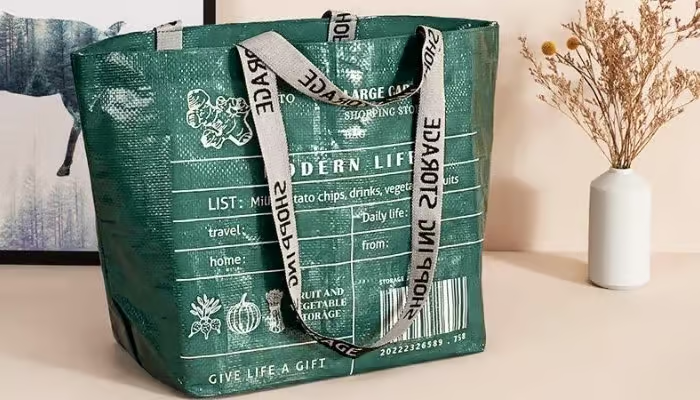
Woven PP bags are made from woven polypropylene strips. This woven structure gives the bag better load capacity, tear resistance, and shape stability than standard non-woven PP.
They are suitable for reusable grocery bags because they can carry heavier products and support repeated use. You can use woven PP bags for supermarkets, bulk shopping, warehouse retail, and heavier grocery items. Many woven PP bags also use lamination, which improves print quality and helps the bag resist moisture in daily shopping use.
RPET Bags

RPET bags are developed from recycled PET materials, often sourced from post-consumer plastic bottles. They help you connect reusable bag programs with recycled material messaging.
This material is useful when you want a bag that supports both reuse and recycled-content positioning. RPET bags can work for retail shopping bags, promotional tote bags, cooler bags, and sustainability-focused campaigns. If you use RPET for brand communication, you should confirm recycled content claims and make sure the fabric, stitching, and printing method fit repeated use.
Cotton Bags

Cotton bags offer a natural look and a soft hand feel, which makes them closely associated with lifestyle, organic, and premium retail positioning.
Cotton works best when the bag will be reused many times. It can support screen printing, heat transfer, and embroidery, which gives you flexibility for different brand styles. You can use cotton bags for organic markets, lifestyle retail, gift packaging, bookstores, and premium promotional programs, especially when customers value a natural look and comfortable daily carry.
Canvas Bags

Canvas bags are a heavier and more structured version of cotton-based materials, often made with thicker yarns or blends. Compared with standard cotton bags, they feel stronger, more structured, and more durable.
Canvas supports long-term reuse and works well when the bag itself needs to feel like a quality item. It can carry heavier products than many light cotton bags and often fits brands that want a premium, practical, and lifestyle-oriented image. You can use canvas bags for boutiques, bookstores, grocery gift sets, branded merchandise, and premium retail packaging.
Jute Bags

Jute bags are made from natural jute fiber. They have a rougher texture, firm structure, and strong natural appearance.
Jute bags work well when you want reusable packaging with a rustic or eco-style look. Their visual texture can help products feel more natural, handmade, or gift-ready. You can use them for groceries, wine, gifts, organic products, farmers’ market packaging, and natural product retail. However, you should consider printing limits and moisture sensitivity before choosing jute.
Polyester Bags

Polyester bags are lightweight, flexible, and easy to fold into compact forms, making them highly portable. Polyester works well for reusable bags that customers need to carry every day. A foldable polyester bag can stay in a handbag, backpack, car, or travel pouch, which makes repeat use easier. You can use polyester bags for foldable shopping bags, travel bags, convenience shopping, and lightweight retail use. For better durability, you should check fabric thickness, seam strength, and folding design.
Paper Bags

Paper bags are produced from materials such as kraft paper, recycled paper, coated paper, or laminated paper. Some thicker paper bags with reinforced handles can be reused several times, especially in gift retail, fashion stores, bakery shops, and boutique packaging.
They offer a clean, familiar retail look and work well for checkout packaging, gift packaging, takeaway food, bakery products, and short-term carrying needs. Because paper bags rely on fiber-based materials, the source of the paper also matters. If your brand cares about material responsibility, certifications such as the Forest Stewardship Council (FSC) can help support paper sourcing claims.
However, most paper bags are still less durable than fabric-based reusable bags. They can lose strength when exposed to moisture, heavy loads, or repeated folding. For this reason, you can treat paper bags as a reusable-supporting option rather than a primary long-term reusable shopping bag.
Compare Common Bag Types
Different reusable bag materials fit different retail goals. You should choose based on product weight, reuse frequency, brand positioning, budget, and customer habits.
| Bag Type | Material / Feature | Reusable Value | Common Uses |
| Non-Woven PP Bags | Lightweight polypropylene fabric | Good for cost-controlled repeated use | Supermarkets, promotions, retail chains |
| Woven PP Bags | Woven polypropylene strips | Stronger load capacity and longer use | Grocery, bulk shopping, heavy items |
| RPET Bags | Recycled PET material | Supports reuse and recycled-content messaging | Retail programs, campaigns, and tote bags |
| Cotton Bags | Natural cotton fabric | Best when reused many times | Organic markets, lifestyle retail |
| Canvas Bags | Thicker cotton or cotton blend | Durable and premium for long-term reuse | Boutiques, bookstores, merchandise |
| Jute Bags | Natural jute fiber | Reusable with natural visual appeal | Gifts, groceries, natural products |
| Polyester Bags | Lightweight synthetic fabric | Foldable and easy to carry repeatedly | Travel, daily shopping, compact bags |
| Paper Bags | Kraft paper, recycled paper, coated paper, or laminated paper | Reusable in some short-term cases, but less durable than fabric bags | Checkout packaging, gift retail, bakery, takeaway food |
Hidden Trade-Offs: Are Reusable Bags Always More Sustainable?
Reusable bags are often seen as a more sustainable alternative, but their actual environmental impact depends on how they are produced, used, and handled after use. While they reduce reliance on single-use packaging, they also introduce trade-offs in material use, production impact, and end-of-life processing. To make better decisions, you need to look beyond the material label and consider how the bag performs across its full lifecycle.

Lifecycle Impact vs Single-Use Alternatives
Single-use bags create environmental impact through frequent replacement because each shopping trip may require a new bag. In contrast, reusable bags usually require more material, energy, and processing during production, so their impact often starts higher at the manufacturing stage. Their environmental advantage appears only when the same bag stays in use long enough to spread that initial impact across many shopping trips.
A UK Environment Agency life cycle assessment found that a cotton bag may need about 131 reuses to have a lower global warming potential than a conventional single-use HDPE bag, under the study’s comparison conditions. In the same comparison, a paper bag needs about 3 reuses, and a low-density polyethylene “bag for life” needs about 4 reuses.
This comparison shows that reusable bags are not automatically more sustainable. Their advantage depends on actual usage. The more often one bag replaces new single-use bags, the more likely it is to offset its higher production impact.
Overproduction and Underuse of Reusable Bags
Reusable bags can create waste when you order too many bags without a clear reuse plan. This often happens when brands treat reusable bags as short-term giveaways instead of long-term packaging tools.
Customers may collect several bags from different stores, campaigns, or events. If the bag design is weak, too small, or inconvenient to carry, many of those bags stay unused at home. In this case, the environmental impact of producing those bags is not offset by repeated use.
Overproduction creates a business issue at the same time. Extra stock ties up budget, takes warehouse space, and may become outdated when campaigns or brand designs change. Reusable bags only create value when production volume matches real usage.
Recycling Limitations
Many reusable bags are designed for strength, print quality, and repeated carrying, but these features can also make recycling more difficult. Even when a material is technically recyclable, the final bag may not be accepted by local recycling systems because of coatings, mixed layers, contamination, or processing limits. The U.S. EPA also notes that recycling depends on proper material handling and local recycling systems, so end-of-life planning should not be ignored.
There are several practical limitations:
- Mixed materials: Bags that combine fabric, plastic film, and coatings are harder to separate and process
- Lamination layers: Laminated surfaces improve durability but reduce recyclability
- Contamination from use: Food residue, dirt, or moisture can make recycling less viable
- Local recycling system limits: Not all regions accept flexible plastics or textile-based materials
How Businesses Can Choose the Right Custom Reusable Bags?
You should choose custom reusable bags by checking five practical factors: size, material, structure, printing, and order scalability. These factors directly affect bag cost, carrying strength, customer reuse, and bulk production stability.

Choose the Right Bag Size
The right shopping bag size should fit the product, feel easy to carry, and avoid unnecessary material.
- 8–10 in wide × 10–12 in high: works well for small, lightweight items such as gifts, cosmetics, bakery products, books, and accessories
- 12–14 in wide × 13–16 in high: commonly used for apparel, everyday grocery items, pharmacy products, and general retail purchases
- 15–18 in wide × 15–18 in high with gusset depth: designed for larger loads, including supermarket shopping, bulk groceries, household goods, and heavier mixed items
Match Material to Product Use
The right material is the material that fits your product weight, customer habits, brand position, and cost target. You can also review our material options for custom tote bags if you need a broader material comparison. Material choice should start with the product, not the material name.
For light retail goods, non-woven PP or polyester can help control cost and support large-volume orders. For heavier grocery items, woven PP or thicker laminated materials usually offer better load strength. For premium retail, cotton, canvas, or jute can create a stronger brand feel, but they also need a higher budget and more careful reuse planning.
You should also match material choice with your sustainability message. If you use RPET, recycled content should be clear and verifiable. If you choose cotton or canvas, the bag should be durable enough for long-term use.
Select the Right Bag Structure
Bag structure decides how the bag carries weight, stands in use, folds for storage, and supports customer experience. You should choose the structure based on product type, checkout scenario, and reuse expectations.
| Bag Structure | Best Use | Practical Advantage |
| Flat Tote Bag | Apparel, books, light retail goods | Simple, low-cost, easy to print |
| Gusseted Shopping Bag | Grocery, supermarkets, mixed retail items | Adds capacity and improves product fit |
| Box-Bottom Bag | Food retail, grocery, takeaway-style goods | Stands better and supports heavier items |
| Laminated Bag | Grocery, premium retail, promotional bags | Improves print effect and moisture resistance |
| Foldable Bag | Daily carry, travel, and convenience shopping | Easy to store and reuse |
| Reinforced Handle Bag | Heavy products and bulk shopping | Improves load strength and carrying comfort |
| Zipper or Closure Bag | Higher-value retail items, travel, and storage | Adds protection and reuse value |
Optimize Printing for Brand Visibility
Printing should match the bag material, artwork style, order volume, and target price. A reusable bag can create repeated brand exposure, but only when the print remains clear after regular use.
| Printing Method | Best For | Key Consideration |
| Screen Printing | Simple logos, solid colors | Cost-effective for many fabric bags |
| Heat Transfer Printing | Detailed logos and smaller runs | Good color detail, but check durability |
| Lamination Printing | Woven PP or non-woven laminated bags | Strong visual effect and large print area |
| Digital Printing | Complex artwork and flexible designs | Useful for small or varied designs |
| Embroidery | Cotton, canvas, premium tote bags | Premium texture, higher cost |
Plan MOQ and Scalability
MOQ and scalability should be planned together because a custom reusable bag project often starts with a trial order, but may later turn into repeat production. The first order should stay small enough to test the market, while the bag specification should remain stable enough to support future expansion.
Limit the project to one or two bag sizes, one main material, and one practical printing method. Too many versions in the first run can raise setup costs and make it harder to see which option actually performs well. Once the first order is confirmed, repeat production becomes easier when the core specification stays consistent. Bag size, material weight, handle style, print position, and packing method should all be kept under control so future orders are easier to manage, scale, and reorder.
Before placing an order, you can prepare:
- Bag size and material
- Logo or artwork file
- Expected trial order quantity
- Possible repeat order quantity
- Target delivery time
- Packing and shipping requirements
The Future of Reusable Bags: What to Expect Next?
The future of reusable bags will focus less on broad eco-friendly claims and more on practical performance. You need bags that meet policy requirements, control cost, support repeated use, and work smoothly in real retail operations.

Policy-Driven Changes Across Regions (US, EU, Australia)
Bag policies will continue to influence retail packaging decisions in the US, EU, Australia, and other major markets. In the EU, the single-use plastics directive continues to push companies to reduce avoidable single-use plastic items and consider more sustainable alternatives. In the United States, state plastic bag legislation shows how bag rules can vary by region, which makes packaging planning more complex.
Lightweight plastic shopping bag bans now apply across Australian states and territories, while some regions set extra rules around bag thickness, compostability, and plastic-laminated materials. For example, South Australia’s 2024 rules include restrictions on non-certified plastic film shopping bags and plastic-laminated paper shopping bags.
For your business, this means reusable bags are not only a branding choice. You should pay attention to local requirements before choosing materials, thickness, labeling, recycled content claims, or compostability claims. A reusable bag program works better when it fits both customer use and regional packaging rules.
Material Innovation vs Cost Pressure
Material innovation will keep growing, but cost pressure will stay important. Recycled content, stronger fabrics, lighter constructions, and improved coatings can all improve bag performance, but each option affects price differently.
For example, recycled materials such as RPET may support your sustainability message, but they can cost more than standard materials. Lighter fabrics can reduce freight and storage pressure, but they still need enough strength for repeated use.
Stronger materials can reduce replacement frequency, but they may increase unit cost. Not every “new” material fits bulk retail orders, especially when you need a stable supply, consistent quality, and repeat production. The better material choice is not always the newest one. It is the one that balances cost, durability, availability, and real customer reuse.
Integration of Reusable Bags into Brand Marketing Strategies
Reusable bags will play a bigger role in brand marketing because customers carry them beyond the checkout counter. A useful bag can show your logo in stores, parking lots, homes, markets, and on daily errands.
You should design the bag around real use first. If customers like the size, handle comfort, structure, and material feel, they are more likely to keep using it. This gives your brand more long-term exposure than a one-time package. A reusable bag becomes a stronger marketing tool when customers choose to carry it again.
Shift to Practical Sustainability
The reusable bag industry is moving toward practical sustainability. You need to look beyond words like “eco-friendly” and check whether the bag truly supports repeated use. Practical sustainability includes material efficiency, durability, reuse frequency, production stability, and end-of-life handling. A bag that looks sustainable but breaks quickly does not create real value.
You should choose reusable bags that perform well in real retail use, not just bags that sound sustainable in marketing copy. The next stage of reusable bags will reward products that are durable, cost-aware, scalable, and genuinely useful for customers.
Conclusion
Whole Foods’ reusable bag policy change shows that reusable bags now need to work beyond incentives. The key lessons are clear: control total packaging cost, choose durable materials, standardize core specifications, support real customer habits, and avoid sustainability claims that do not match actual reuse.
If you are planning a custom reusable bag project, Gentle Bags can help you turn your idea into a practical, production-ready solution. We support material selection, size planning, structure development, logo printing, sampling, and bulk production, so you can build reusable bags that fit your market, budget, and brand needs. You can contact us to discuss your requirements.
FAQs
1. Why did Whole Foods end the reusable bag credit program?
Whole Foods ended the reusable bag credit program because reusable bag use had already become more common. The retailer no longer needed a small financial reward to encourage the behavior.
2. Are reusable bags still better than paper bags?
Reusable bags can be more sustainable than paper bags, but only when they are used multiple times. A reusable bag that is used many times usually creates more environmental value than a single-use paper bag.
3. What materials are most commonly used in reusable grocery bags?
Common materials include non-woven PP, woven PP, RPET, cotton, canvas, jute, and polyester. Each material fits different cost levels, durability needs, and brand positioning.
4. How many times should a reusable bag be used to be sustainable?
A UK Environment Agency life cycle assessment found that a cotton bag may need about 131 reuses to have a lower global warming potential than a conventional single-use HDPE bag, under the study’s comparison conditions.
5. What type of reusable bag is best for retail businesses?
The best option depends on your products, budget, and customer use. For many retail cases, non-woven PP or woven PP offers a balance of cost and durability, while cotton or canvas may fit premium branding needs.